
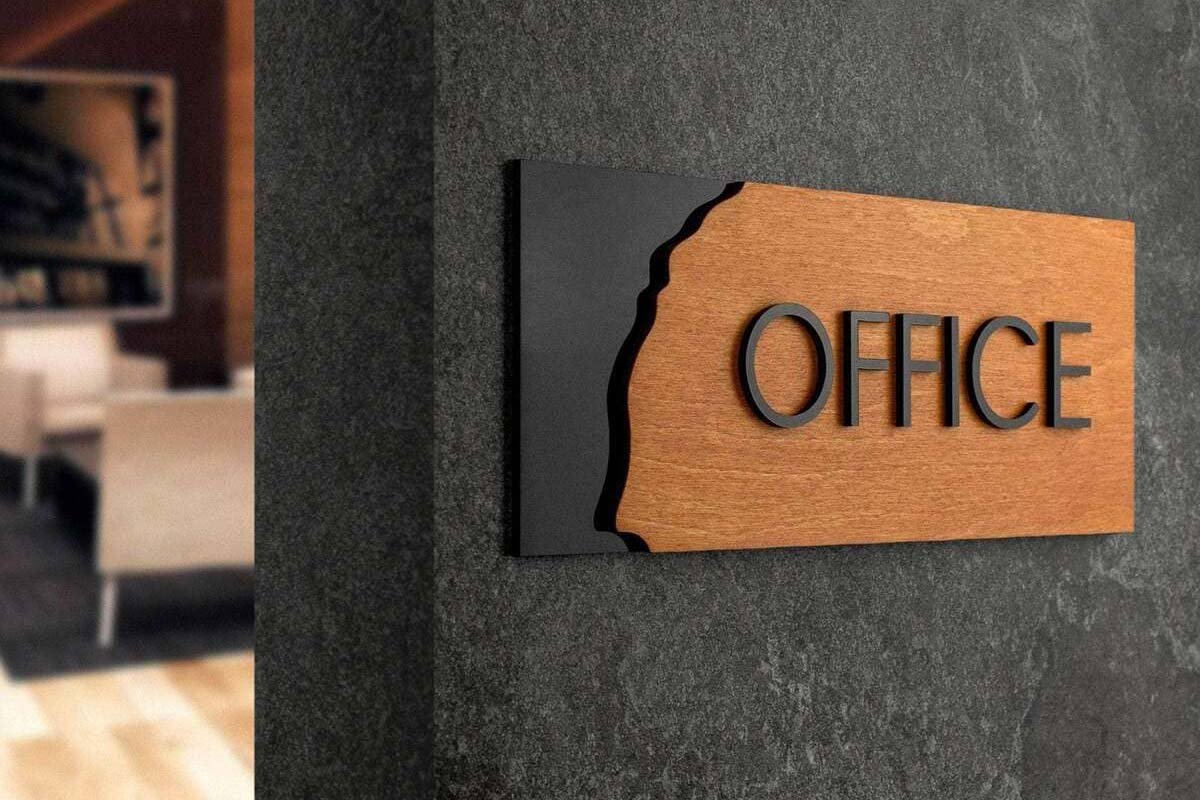
Anyone who has ever walked down a hospital corridor looking for exam room 4B knows why room signage matters. In buildings with dozens of rooms serving different purposes, that little door plate does more work than it deserves. Offices, hotels, medical centers and schools operate there. When signage is generic or slapped on without much thought, people hesitate, back off, or interrupt someone else’s day to ask for directions. Custom room signs solve this by tying identification to how a building actually functions, not how a catalog assumes it should.
Why personalization beats generic signage
Off-the-shelf signage doesn’t know that your hallway is narrower than average, or that two rooms on the third floor are the same across the hallway. Custom signals are built around these particularities, which is precisely what makes their information reliable.
A few things that custom signage gets right that generic signage usually doesn’t:
- With consistent dimensions and placement in every room, people no longer have to re-learn the system floor by floor
- A clear separation between rooms that would otherwise look the same at a glance
- Numbering or naming that actually follows the building’s internal logic, rather than a generic template
Get those three right and people will stop noticing the signage, which is really the goal. They just know where they are going.
Where custom room signs earn their keep
Personalized signage is important where people are moving on their own, often for the first time, when no one is available to point them in the right direction.
- Office buildings, where meeting rooms, departments and shared spaces must be found without staff escort, especially in a trying business. run smoothly and efficiently
- Hotels where guests navigate on their own after check-in
- Medical and educational facilities, where clear signage protects schedules and safety, in particular specialists with whom a health clinic is a partner
- Administrative buildings, where the visitor’s first impression begins when they walk through the door
In each of these settings, signage ceases to be decorative and becomes infrastructure.
Materials built to survive everyday contact
Room signs are touched, cleaned and looked at every day, so the choice of material is not a style decision, but a durability one. Wood holds up well in low traffic, warmer environments and ages with some character. Stainless steel can withstand years of hands, cleaning chemicals and moisture, which is why it is often featured in hospitals and gyms. Acrylic glass remains clear under fluorescent lights and does not yellow the way cheaper plastics do. All three are usually placed against the wall or table, which keeps them out of the way and consistently visible.
Production details that really affect reliability
The manufacturing options behind a sign matter more than most people realize. CNC laser cutting keeps dimensions uniform and edges clean on an entire building’s worth of signage, so nothing is a little too close to the next. Permanent UV printing keeps letters legible even after years of washing, instead of fading into a ghost by two years.
See also

Before you order, you should know:
- Single orders usually ship in 1-3 days; Bulk routes of 100-200 signals are approaching 7-10 days
- Most jurisdictions require doors no smaller than 3 inches to count as legible signage
- Braille can be added to most designs upon request to meet ADA accessibility requirements as part of the big picture designing spaces with limited mobility
- Wall-mounted and desk-mounted formats cover most use cases without custom hardware
Each sign is still finished by hand, which keeps the quality consistent even when an order spans dozens of rooms. That combination of precision cutting and hand finishing keeps maintenance low for years after installation.
The expectation for indoor navigation has quietly changed: a well-managed building should not require staff at every corridor intersection. Custom room signs are how that expectation is met. When the system is consistent, people move with confidence, employees spend less time giving directions, and the building runs as designed. To see how this plays out in practice, e.g custom room signs — Bsign illustrate this approach.
Better Living may earn commissions through affiliate links and may occasionally feature sponsored or partner content. If you make a purchase through our links, we may receive a small commission at no cost to you.
