
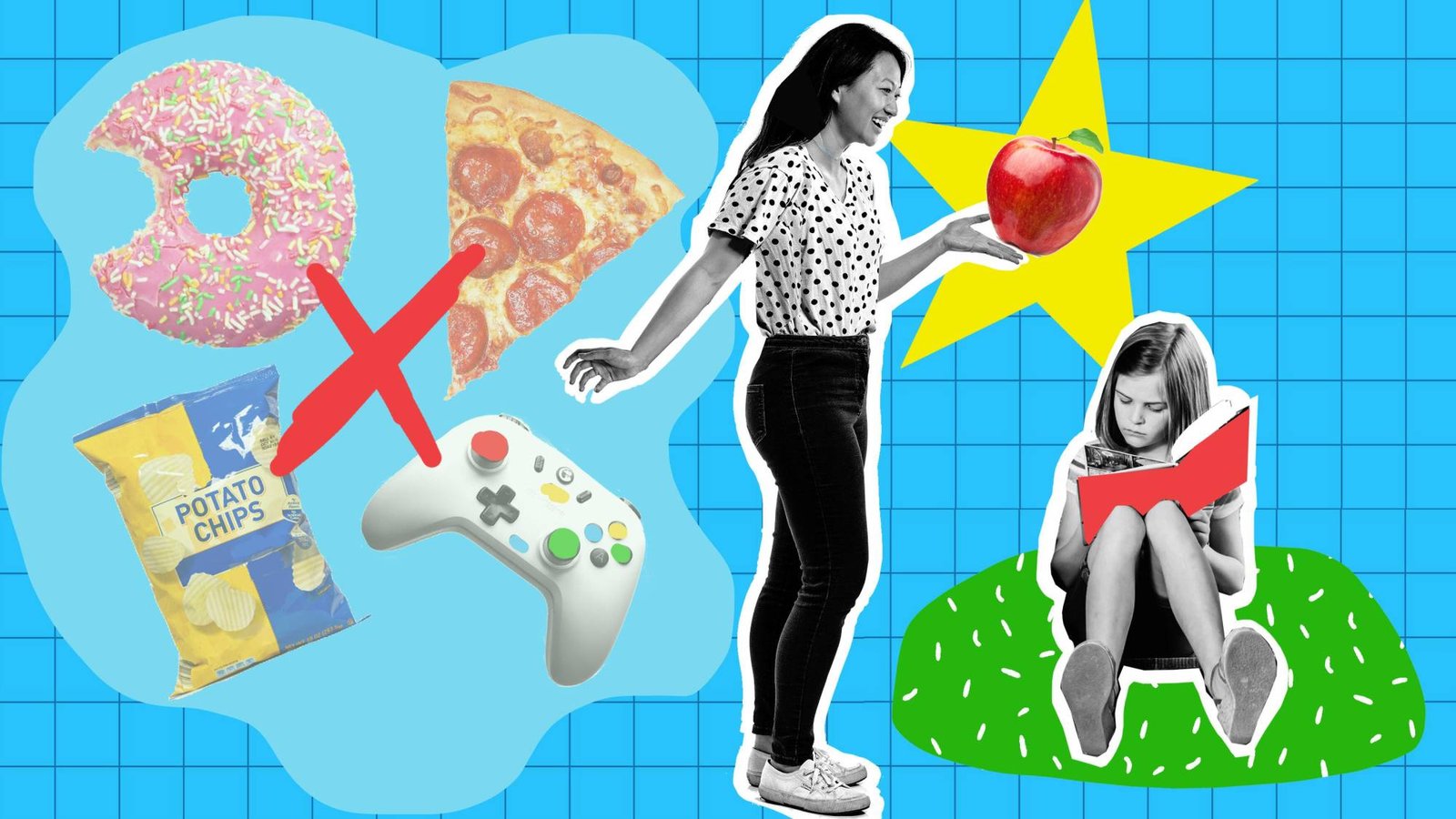
And in the process, they have found easier and more effective ways for parents to deal with a tsunami of temptations in children’s lives.
Focusing on willpower can backfire
Willpower is the ability to resist the temptation right in front of you, Milyavskaya says. “This is the idea of diligently resisting temptation.” For example, your ability to say no to a fast food cheeseburger for dinner and opt for grilled salmon instead. Or resist the video game and finish your homework.
“15 to 20 years ago, it was thought you could train willpower,” she adds, by building a child’s ability to resist temptation the way athletes build muscle—through practice. Let kids play video games every day and teach them to stop after an hour, for example. Or expose your children to “forbidden” foods, such as chips, crackers, and soda, so they can learn to self-regulate and not ingest too much.
“There was this idea that if you were exposed to junk food more, you would be better able to resist it,” says Michael EnzlichtProfessor of Psychology at the University of Toronto. But there was one big problem with this approach: it didn’t work for very long. “Evidence from my lab and other people’s labs shows that it won’t help you in the long run.”
In fact, he says, trying to build children’s willpower actually backfires. By regularly offering children temptations, parents teach children to prefer and want these foods and activities. “Guess what the kids will like?” – asks Inzlicht. “Fatty foods and sugary foods because that’s what we’re programmed to like,” he says.
New strategies for modern temptations
Early research on willpower relied on surveys or questionnaires to measure a person’s self-control and their success in life. Researchers assume that these questionnaires measure a person’s willpower – the ability to resist the temptations before you.
But in early 2010, psychologists decided to stop relying on surveys and instead study what people do in real life to achieve their long-term goals. These studies revealed a surprisesays Inzlicht. More successful people did not have better will than those who were less successful. Instead, successful people organize their lives so that they don’t have to use willpower often. They exposed themselves to fewer temptations.
And that’s the strategy parents should be teaching their kids, says Wendy Wood, a Professor Emeritus of Psychology at the University of Southern California. “Teach them how to choose situations that make them less likely to do things that aren’t good for them. Teach them how to control temptation,” says Wood.
In essence, parents should not teach children how to say “no” to the swamp standing in front of them – as in scandalous Stanford study — but rather, learn “how to put a pie pan on the marshes,” says Wood. Or how to avoid being in a room with marshmallows.
“For example, parents can teach their kids to leave their phone in another room when they’re studying,” says Wood, or use apps that block distracting websites and games. They can teach kids how to keep candy and ultra-processed foods out of the house and out of their backpacks or cars. In other words, parents can create times and places in children’s lives where distractions or temptations are not an option at all—and show them how they can implement this strategy themselves.
Learn to love what is good for you
The great thing, Wood says, is that parents can help kids fall in love with the healthier alternatives—love salmon and bok choy for dinner, love playing outside with friends, or love working hard at school.
“Your kids’ choices are malleable and really influenced in part by what they’re exposed to,” she says. “You can really learn to like the things that are good for you.”
To shape their preferences, she says, give your kids countless opportunities to experience the pleasure of these healthy options. For example, Wood wanted to teach his children to love reading. So she kept books in her car and purse. “I like to eat in nice restaurants and I would take my kids with me.” While they waited in the restaurant, the only option they had was to read. And so they developed a habit of reading. “Today, my kids are still voracious readers.”
Finally, Carleton University Marina Milyavskaya says, pay attention to how you talk about healthy foods and activities. Don’t present them as burdens, sacrifices, or punishments. Instead, focus on how delicious those foods are or how fun an activity is offline. Studies have found that our language shapes our food preferences as well as how much we eat.
“Whether it’s eating healthier or going to the gym, if you make the activity more fun in the moment, then you’re more likely to do it again,” Milyavskaya says.
So if you want your child to love salmon, talk about how great it tastes with a delicious garlic soy sauce and wild rice. And how great it makes you feel right after you eat it. Something a frozen ultra-processed dinner won’t do.
