
December 6, 2024
The French parliament votes to dismiss the government.
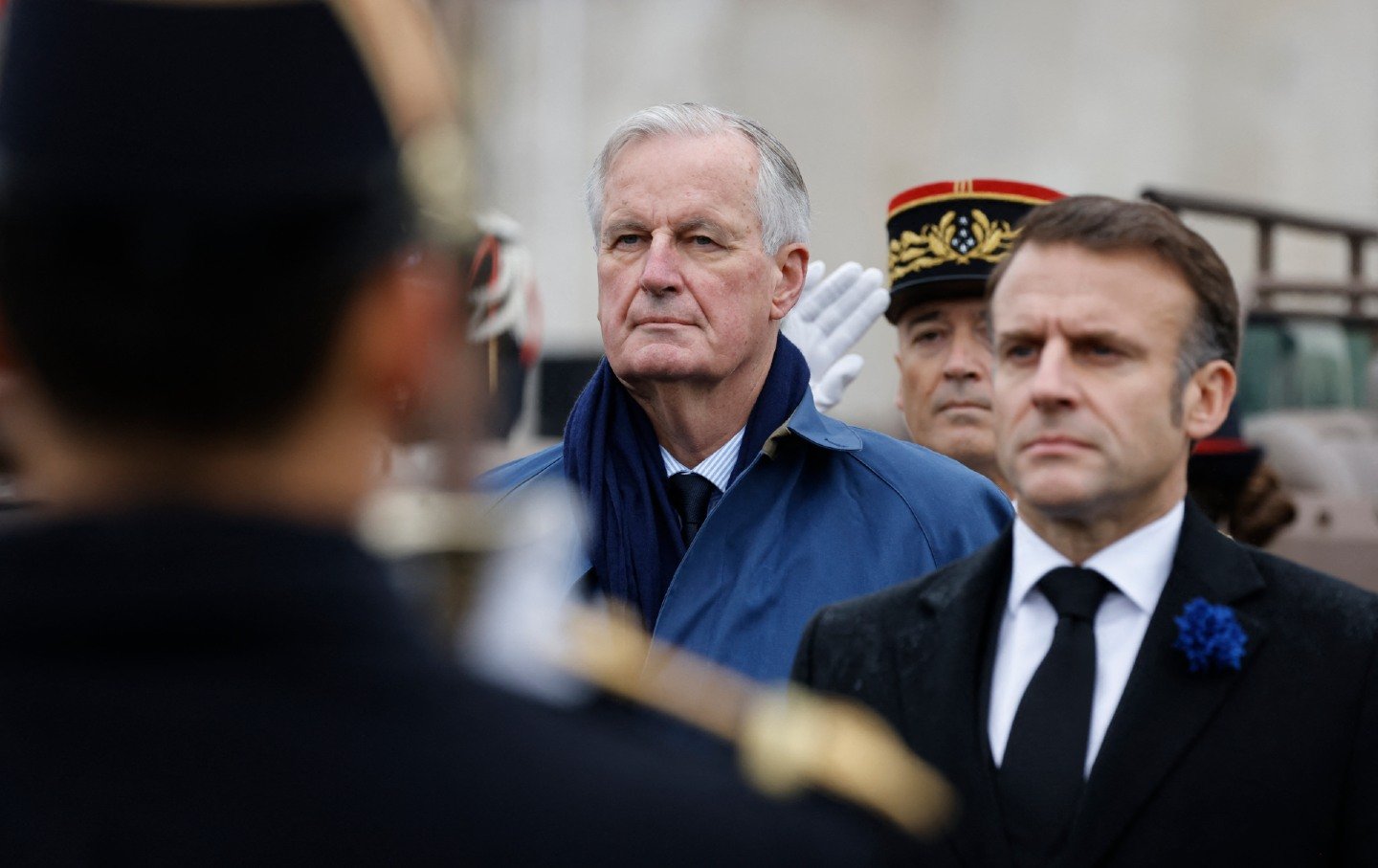
Macronism has died a second death. On December 4, France’s National Assembly overwhelmingly passed a vote of no confidence in Prime Minister Michel Barnier, now the shortest-serving head of government in the Fifth Republic. When President Emmanuel Macron appointed the 73-year-old former Brexit negotiator to the post in September, it was a long-term bid to retain control of the government. The prime minister’s main challenge was to secure a 2025 budget that would preserve the president’s pro-business agenda while charting a path to major deficit reduction amid growing concerns about France’s public finances.
But there were simply no votes. Leading a minority coalition that unites parliamentary Macronists from the center-right Républicains Barnier, the prime minister could count on the support of barely more than 200 deputies in the lower house (289 votes are needed for a majority). Even this “common ground,” as surrogates and the press coined the shaky Macronist-Républicains alliance, proved tenuous from the start. Since the formation of the government, the parties in the coalition and their leadership have been prone to infighting and competition.
With the math stacked against him, Barnier had no choice but to throw down the gauntlet on December 2 when he announced that he would use a special constitutional provision to force a social security funding bill through parliament without a vote in the National Assembly. Citing “49.3”, Barnier launched a vote of no confidence in his government, which was immediately tabled by the left-wing New Popular Front (NFP). The votes of 331 MPs — mostly from the left and the far-right National Union (RN) party of Marine Le Pen — were more than enough to block Barnier and remove the prime minister from power. Macron is running out of gas in parliament.
It is the same with the position of the president in society. Barnier’s downfall marks the latest twist in a political crisis that began in early June when Macron took the country by surprise by dissolving the National Assembly. The snap election that followed split the lower house in thirds and revealed widespread disapproval of Macron’s technocratic centrism. Le Pen and her far-right allies, once considered the favorites of this campaign, won 142 seats in the National Assembly. The NFP came out on top with 193 seats thanks to tactical voting in the second rounds by moderates and leftists who sought to block Le Pen’s party from power. Meanwhile, Macron’s centrist alliance has shrunk to just 166 seats, down from the 250 it held in the previous parliament.
Barnier’s tenure has provided a brief reprieve for a president who remains at record low approval ratings. According to a November opinion poll, 76 percent of the public disapprove of Macron’s handling of the presidency. When Barnier’s budget bill passed the National Assembly, the majority felt that the opposition parties should vote to sink the government. “My decision to dissolve the National Assembly was not understood,” Macron said in a televised address Thursday night, in a rare admission by a president who is chronically overconfident.
To be fair, Macron placed most of the blame on the opposition. “(Barnier) was convicted — unheard of for 60 years — because the extreme right and the extreme left united in an anti-republican front and because the forces that used to rule France decided to help them,” Macron continued. The president is expected to name a new prime minister in the coming days after holding a series of meetings with figures from the center-left Socialist Party, his centrist bloc and Republicans.
Current issue
Barnier’s government failed when the main autocracy that sustained it gave way: Le Pen’s good graces. Designed primarily to block the NFP from power, Barnier’s only other possible crutch was the far right. Since September, Rassemblement National has been basking in this role of king. “Whatever happens, we decide,” boasted Jordan Bardella, the RN’s official president, this fall.
Barnier bent down to coax and reassure the RN. He appointed hard-line conservatives to his cabinet to shore up his government on terms that might be amenable to Le Pen, including ultraconservative Bruno Retalho as interior minister. Barnier has promised to consider reforms to France’s legislative electoral system, which have long been demanded by the far-right, and has prepared another tough anti-immigration package for early 2025. When Macronist Finance Minister Antoine Armand suggested at the end of September that he would not speak to Le Pen and the RN during the drafting of the budget, Barnier reprimanded him and called Le Pen to apologize.
To grease the wheels of their rapprochement, the “common ground” parties have moved closer to Le Pen on immigration, while the National Alliance has shifted to a more traditionally conservative stance on economic policy. However, the risk of tying the RN’s fortunes too closely to an unpopular government ultimately prompted Le Pen to bring down the curtain, if only as a show of strength.
For her part, Le Pen may now return to a more compromising position. After the vote, she said her party was ready to “let (the next government) get to work” and would be willing to “cooperate” in creating a new budget. In recent days, Le Pen’s group has reportedly been instructed not to over-celebrate the fall of Barnier.
The collapse of the Barnier government also highlights tensions within the NFP alliance. The NFP’s centrist wing, in particular the Socialist Party, has expressed its willingness to enter into a “non-judgment” pact with the Macronists. However, such a move is a non-starter for La France Insoumise, the largest party in the alliance, which has vowed to break with Macron’s policies and reverse reforms such as raising the retirement age.
Now Macron faces the unenviable task of appointing a new prime minister. While figures such as independent centrist François Bayrou could destroy the NFP alliance, others such as Républicains’ Retailleau or Macron’s defense minister Sébastien Lecornu could better appease Le Pen.
Whoever succeeds Barnier, it seems unlikely that any personnel changes can save Macron’s political project.
More from Nation
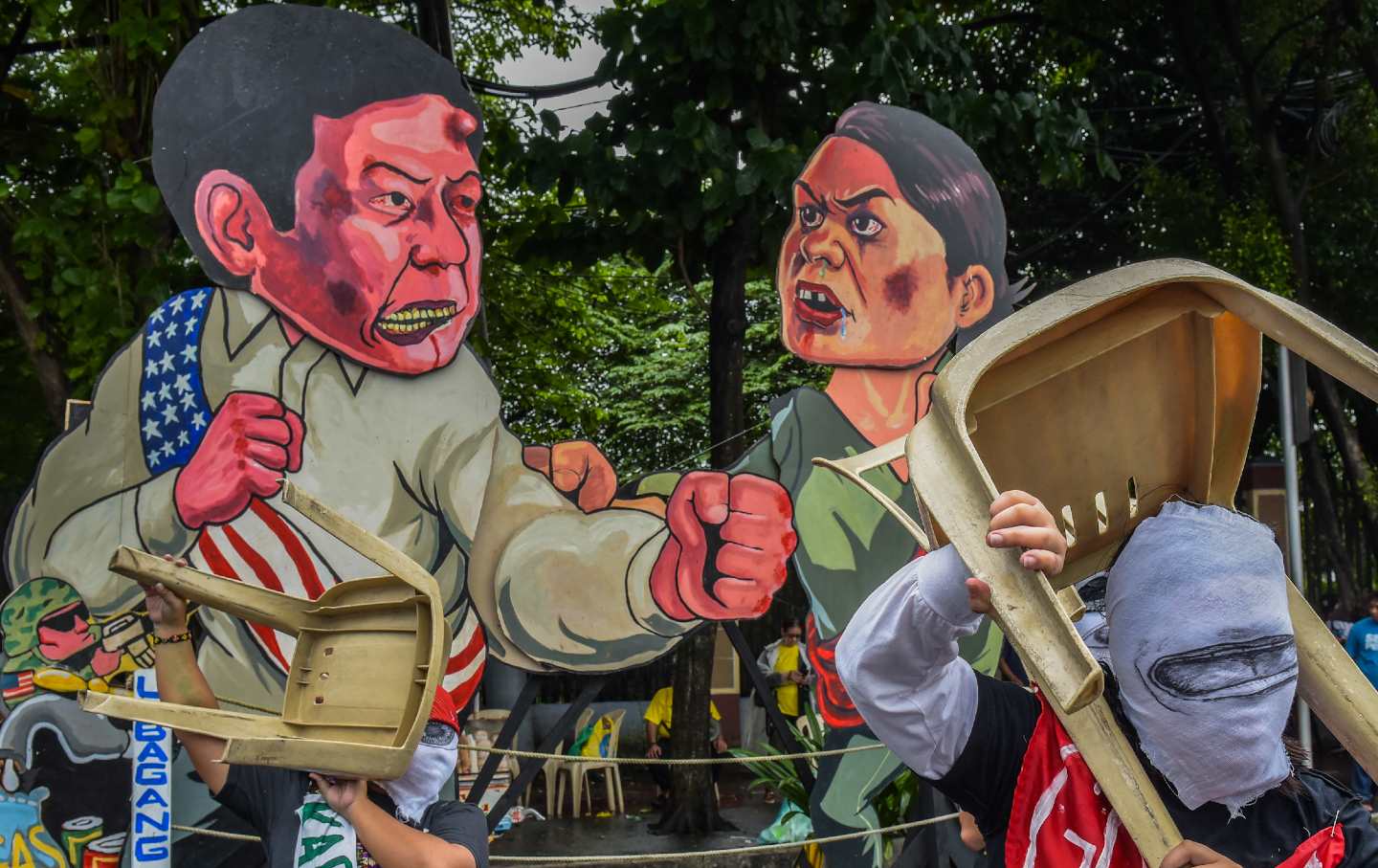
The clash between the Philippines’ dynastic duo is an entertaining political soap opera. But this dispute can turn violent very quickly.

All over the world, backpacks symbolize freedom. But here we use them to carry what is left of our lives.
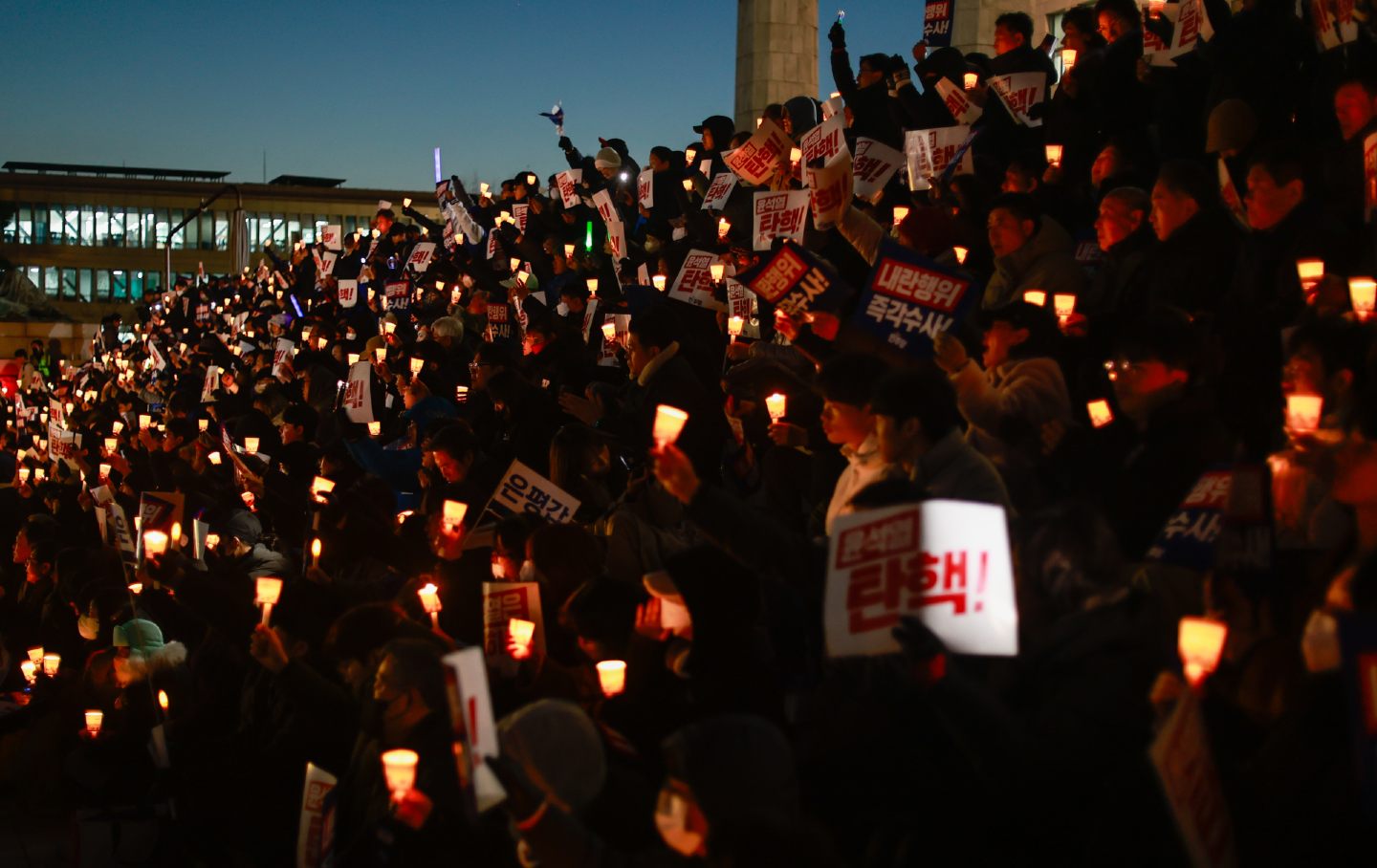
The uprising against South Korean President Yoon Suk-yeol prevented him from seizing dictatorial powers. It could also help avoid a cold war with China.
Although the UN is often seen as a target of Israeli aggression, the UN has always played a crucial role in the oppression of the Palestinians.

It’s shamefully easy to go about your life while Israel continues its offensive on Gaza with the full support of the US, and it’s important to resist this impulse.
