
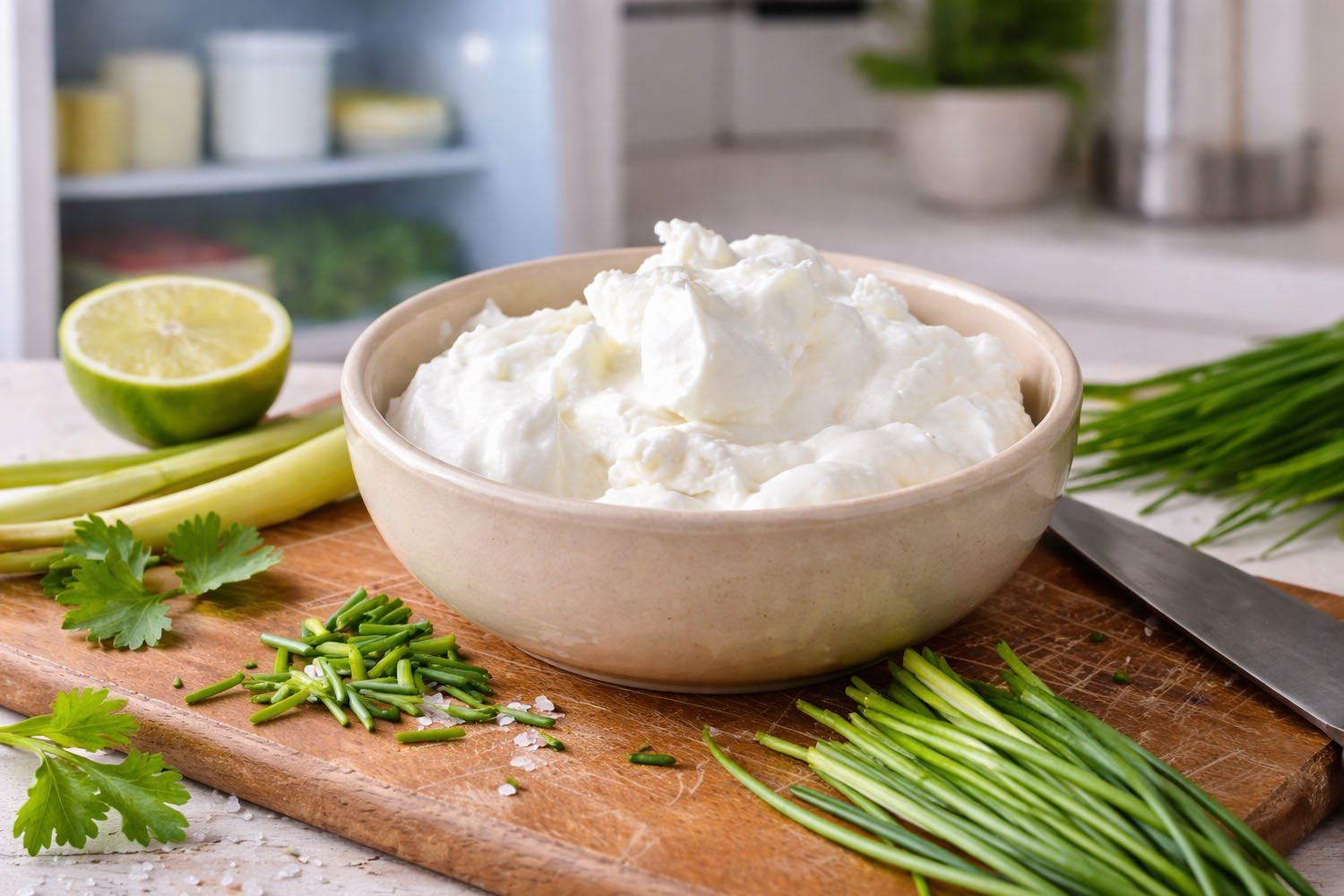
Someone left sour cream on the counter and now you’re wondering if it’s still safe. Or you’re wondering if sour cream should even be kept cold. Does sour cream need to be refrigerated?
Short answer: Yes, absolutely and always. Sour cream is a fresh dairy product that needs to be constantly chilled. Unlike condiments that can withstand pantry storage after opening, sour cream has no safe room temperature window of more than 2 hours.
To see how dairy and storage products compare in storage needs, visit our The Complete Guide to Food Storage.
To take the keys
- Sour cream should always be chilled. There is no pantry option, even for unopened containers.
- The 2 hour rule is strictly enforced. Sour cream left at room temperature for more than 2 hours should be discarded. 1 hour if the temperature is above 90 degrees F.
- Store at the back of a refrigerator shelf, not the door The temperature of the doors varies too much.
- Opened sour cream lasts 1 to 2 weeks properly refrigerated and sealed.
- This is not like ketchup or hot sauce. Sour cream has no acid or salt preservatives that allow it to be stored at room temperature.
Why sour cream always needs to be chilled
Sour cream is an entirely different category than most condiments when it comes to refrigeration. Ketchup, mustard, hot sauce, and Worcestershire sauce can survive at room temperature after opening because of their high acid, salt, or sugar content. Sour cream does not contain any of these protective factors in sufficient quantities.
Sour cream is made from cream fermented with lactic acid bacteria. Although the fermentation gives it a slight acidity that gives it some preservation, the product is 18 to 20% butterfat fresh milk with still a lot of moisture. This causes bacteria including Staphylococcus aureus, Salmonella and Listeria to multiply rapidly when temperatures rise.
The FDA sour cream is classified as a time- and temperature-controlled food, meaning it must be constantly refrigerated to keep it safely at or below 40 degrees F. The USDA FoodKeeper lists sour cream along with other fresh dairy products that have explicit refrigeration requirements from the time of purchase.
The 2 hour rule is not flexible for sour cream
Ambient temperature is a hard limit
The USDA danger zone (40 to 140 degrees F) is where bacteria multiply rapidly in perishable foods. For the sour cream, the instructions are clear: do not leave it at room temperature for more than 2 hours. When the ambient temperature is above 90 degrees F, that window drops to one hour.
This applies whether the container is open or unopened, and whether the container is whole or a small cup in a serving container. Sour cream left at dinner can be returned to the refrigerator in less than 2 hours. Sour cream left on the counter overnight should be discarded, no matter how good it looks or smells.
Unlike vinegar-based seasonings, where the acid provides a significant buffer, sour cream has no such buffer. The 2 hour limit is realistic, not conservative.
Where in the refrigerator matter
Not all parts of the refrigerator are equally cold. The door shelves experience the greatest temperature variation because they are exposed to the room air every time the door is opened. This makes the door the worst place to store sour cream, although many refrigerators have a special milk compartment in the door.
Store sour cream on a shelf in the main body of the refrigerator, toward the back, where temperatures are at or below 40 degrees F. This applies to both opened and unopened containers. The difference in shelf life between door storage and main body storage can be several days.
How long does chilled sour cream last?
| the state | How Long Does It Last? |
|---|---|
| Unopened, constantly in the refrigerator | 1 to 3 weeks more than sell-by date (full fat); shorter for low-fat and fat-free |
| Open, close properly and refrigerate | 1 to 2 weeks |
| Leave at room temperature (less than 2 hours) | Refrigerated and safe to use |
| Leave at room temperature (more than 2 hours) | Discard |
Sour cream and other dairy products in the fridge
How It Compares
Sour cream requires the strict refrigeration of other fresh dairy products. Butter is a notable exception to milk: salted butter can sit in a covered dish for 1 to 2 days because its very high fat content and low moisture create conditions where bacteria cannot easily grow. The cream has none of these properties.
Condiments such as hot sauce, mustard, and ketchup may last at room temperature after opening because of their acid, salt, or sugar content. Mayo-based condiments like tartar sauce can’t, and sour cream joins the strict cooling category, for different reasons. The danger of sour cream comes from the milk composition rather than the egg emulsion base.
Good storage practices
How to keep sour cream fresh
Store at the back of a shelf in the main fridge. Away from the door, away from heat generating appliances, in the coldest and most consistent part of the fridge.
Close tightly every time. If the original container does not reseal securely, transfer to an airtight container. Exposure to air speeds spoilage and sour cream absorbs odors from the refrigerator.
Press the plastic wrap onto the surface. For containers you expect to store for more than a few days, pressing a layer of plastic wrap directly onto the surface of the sour cream before replacing the lid reduces exposure to air and slows whey separation.
Use only clean tools. Never use a spoon that has touched other food. Cross-contamination is one of the most common causes of premature sour cream spoilage.
See also

Never return sour cream from serving bowl to serving bowl. Once the sour cream has touched utensils or food in a serving bowl, store it separately. Discard what’s left in the bowl after the meal, instead of returning it.
Mark the date when you open it. Write the opening date on the lid. Sour cream that has been open for 10 days is the same as the one that was opened yesterday.
Refrigerate immediately after purchase. Do not leave sour cream in a hot car or on the counter after purchase. Using too much temperature before storage reduces the effective shelf life from day one.
Recipes that use sour cream
These Better Living recipes put sour cream to work:
- 7-layer burritos: the sour cream is one of the essential layers, it adds fresh cream against the spice and heat
- Chicken Enchilada Boats: a generous dollop of sour cream finishes off each boat perfectly
- BBQ Chicken Nachos: the sour cream cools the sweetness of the BBQ and adds richness to every bite
- Tortilla Soup: swirled in the bowl on the table, the cream nicely rounds off the acidity of the broth
Frequently Asked Questions
I left the sour cream for 3 hours. Is it safe yet?
no Three hours exceeds the USDA’s 2-hour guideline for perishable milk at room temperature. Discard Bacterial growth occurring in the danger zone between 40 and 140 degrees F is not reversible by subsequent cooling. A new container costs less than a foodborne illness.
Can I store sour cream in the freezer to make it last longer?
Technically yes, but not recommended for most uses. Freezing changes the sour cream significantly. When thawed, the fat and liquid separate, leaving a grainy, watery consistency that doesn’t work as a topping. Frozen and thawed sour cream works well when incorporated into cooked dishes where texture is less critical, such as soups, casseroles, or baked goods. If you freeze, use within 2 months and thaw slowly in the refrigerator.
Is it safe to eat sour cream straight from the container at a party?
If the chips or utensils go directly from the mouth into the bowl, no. Double dipping introduces bacteria that significantly shortens the safe window for remaining sour cream. Always transfer food to a serving bowl instead of placing the entire container on the table. Serve what’s left in the container after 2 hours instead of returning it to the fridge.
Further reading
Better Living may earn commissions through affiliate links and may occasionally feature sponsored or partner content. If you make a purchase through our links, we may receive a small commission at no cost to you.
