
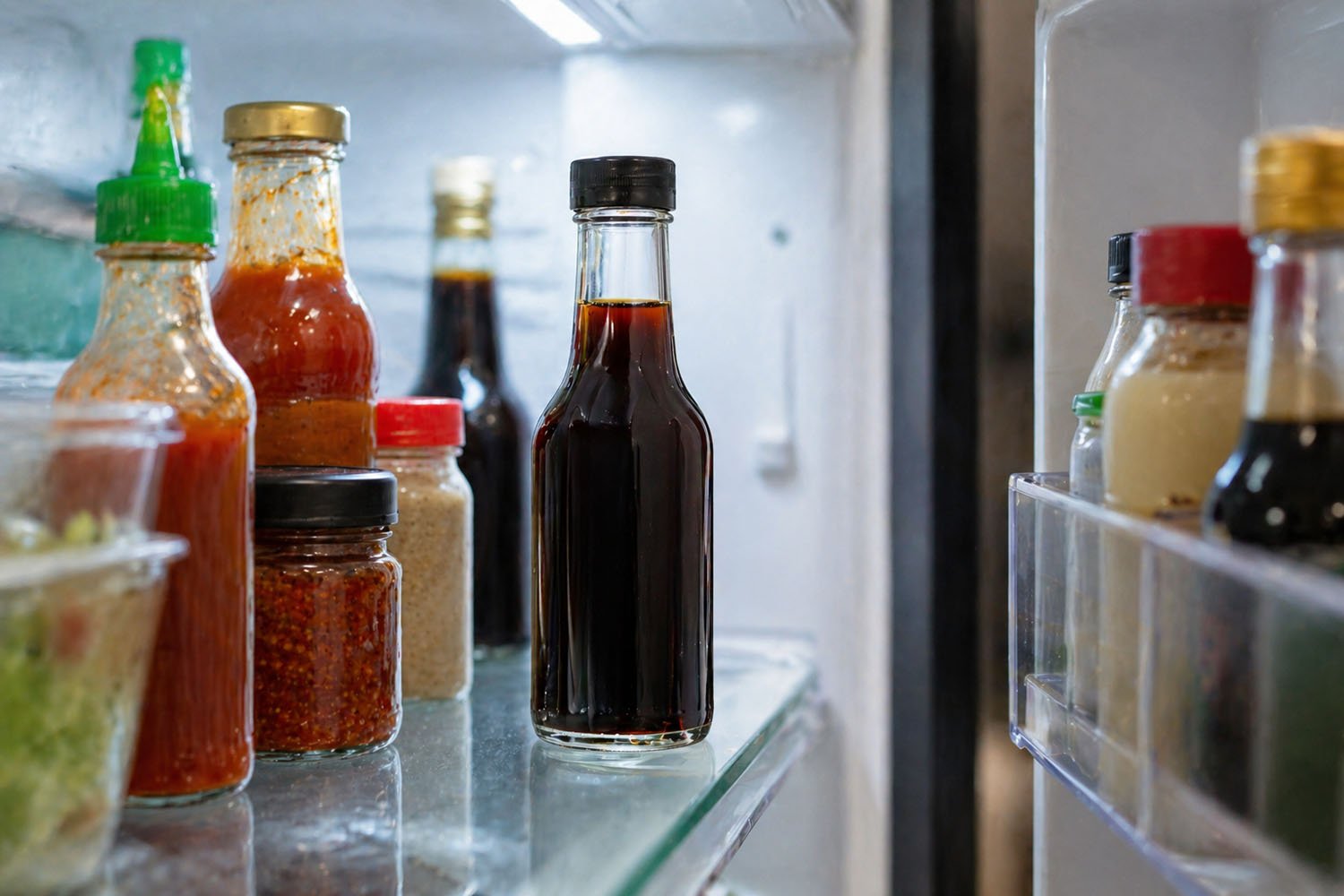
You just bought a bottle of ponzu sauce and you’re not sure if it’s in the pantry or the fridge. Or you recently opened one for a recipe and are wondering if it should be refrigerated immediately. Does ponzu need to be refrigerated?
Short answer: Before opening, no. Store-bought ponzu is shelf-stable and sits in a cool, dark pantry until you open it. After opening, yes, always. Refrigeration is necessary to maintain the citrus brightness that makes ponzu distinctive when opened and to slow the degradation of the dashi component. Homemade ponzu should be chilled from the moment it is made.
To see how seasonings compare in shelf life, visit our The Complete Guide to Food Storage.
To take the keys
- Unopened store-bought ponzu: follow the best-before date. Kikkoman specifies up to 18 months in plastic bottles for Asian sauces. No refrigeration required before opening.
- Open store-bought ponzu: refrigerate immediately. Best within a month for peak citrus flavor. It can be used up to 3 to 6 months.
- Homemade ponzu: always in the fridge Closed up to 3 months; Filter every 1 to 2 weeks during active use.
- Ponzu needs cooling more urgently than soy sauce because citrus juice oxidizes quickly and the dashi base is more biologically active.
- A 2-hour room temperature rule applies. Don’t leave ponzu sitting on a dinner table or cooking for too long.
- Loss of quality, not safety, is the main concern with open ponzu left in the fridge. The brightness of citrus fruits fades quickly without being stored in the cold.
Before opening: The pantry is correct
Store-bought ponzu (Kikkoman Ponzu Citrus Seasoned Dressing and Sauce, Mizkan Ponzu, and similar brands) are commercially produced with preservatives, stabilizers, and controlled processing that make them stable before the seal is broken. Kikkoman specifies that their Asian sauces in plastic bottles must be used within 18 months of the production date code. Always follow the last date printed on the bottle you have.
Do not refrigerate an unopened bottle of ponzu unnecessarily. It wastes fridge space and provides no benefit. Store in a cupboard away from the stove, oven and direct light until ready to use.
After opening: why refrigeration is not optional
The Citrus Problem
Ponzu sauce is not just soy sauce. It contains citrus juice (yuzu, sudachi or lime depending on the brand), mirin, rice vinegar and dashi. Each of these ingredients degrades faster than the soy sauce base at room temperature.
Citrus juice is especially sensitive. The volatile aromatic compounds responsible for ponzu’s bright, fresh and watery character begin to oxidize immediately after opening the bottle. At room temperature, this process is significantly accelerated. A bottle of ponzu left unrefrigerated after opening will lose its distinctive citrus brightness within days and become flat, dull and most of all sour without any fresh quality worth consuming.
Kikkoman’s Foodservice FAQ guidelines apply directly here: Asian sauces, including ponzu, should be refrigerated after opening. For the best quality, they recommend using it within a month of opening. This is not a safety period – the sauce will not be immediately dangerous after a month. What it will do is make it taste less and less like the bright, balanced seasoning it’s meant to be.
The Complete Ponzu Type Cooling Guide
| The type | Before opening | After opening | The best inside |
|---|---|---|---|
| Store-bought ponzu | Cool and dark pantry; Up to 18 months per Kikkoman; follow the best date | Cool immediately | 1 month for peak flavor; It can be used between 3 and 6 months |
| Homemade ponzu (sealed) | Always refrigerate | Always refrigerate | Up to 3 months in the refrigerator |
| Homemade ponzu (strained, used) | Always refrigerate | Always refrigerate | 1 to 2 weeks |
Why Ponzu needs to be chilled more than soy sauce
The difference between dashi and citrus
Regular soy sauce is primarily a salt-fermented grain with a very high sodium content that acts as a powerful natural preservative. Kikkoman’s FAQ specifically states that their soy sauce “would not spoil if not refrigerated” because the salt concentration prevents bacterial growth.
Ponzu is a different product. Yes, it has soy sauce as a base, but it also has citrus juice, mirin, rice vinegar and dashi. The dashi ingredient (a broth made from kombu seaweed and bonito flakes in traditional recipes, with extracts and flavorings approximated by commercial ponzu producers) includes compounds that are more biologically active than salt-preserved soy. Citrus juice contributes to volatile aromatic compounds that are quickly oxidized. Mirin adds sugars that support fermentation over time.
The combined effect is a sauce that is more temperature sensitive than regular soy sauce after opening. Refrigeration is the right call every time you open any bottle of ponzu.
Serving Ponzu at Dinner: Room Temperature Safety
Ponzu is often served as a table garnish for shabu-shabu, hot pot, grilled meats, and sushi. When serving at a dinner party or gathering, ponzu can sit on the table at room temperature throughout the meal. The FDA 2 hour guidelines apply. After the meal, return the ponzu to the refrigerator immediately. Do not leave on the counter overnight.
For reasons of taste beyond safety, bringing ponzu cold to the table and allowing it to come to room temperature before serving is preferable to leaving it out for hours. The cold temperature helps to preserve the aromatic citrus volatiles until their use.
Good storage practices
How to properly store Ponzu
Unopened: cool, dark pantry, away from heat and light. A kitchen cabinet away from the kitchen is ideal. No refrigeration required before opening.
After opening: refrigerate immediately, close tightly. Put the cap on firmly after throwing. Contact with oxygen degrades the character of citrus faster than anything else.
For homemade ponzu: glass jar, back of fridge, always cold. Glass preserves aromatics better than plastic. Store at the back of a main shelf where the temperature is most consistent and coldest.
Label with opening date. Ponzu at 3 weeks and ponzu at 5 months in the fridge look the same. A date on the label tells you where you are in the quality window.
See also

Use within a month for the best citrus punch. If you are using ponzu as a sauce for the bright, fresh quality of the citrus, use it within the first month. Beyond that, the sauce gradually becomes more soy-forward and flat.
Buy smaller bottles for occasional use. A 10 ounce bottle finished in a month tastes better than a larger bottle used in 6 months. Match the bottle size to your actual usage rate.
Never use wet tools. The water that enters the bottle accelerates the degradation of the soy and citrus ingredients.
Ponzu sauce recipes and uses
- Make sushi at home: fresh ponzu is a lighter sauce for delicate fish and seafood in homemade sushi
- Rainbow Spring Rolls: Ponzu’s citrusy sparkle is the perfect sauce for fresh, vibrant spring rolls
- Vietnamese mixed grill: A drizzle of ponzu over the grilled meat adds acidity that makes every bite sing
- Chinese Chicken Lettuce Wraps: ponzu adds a tangy layer of citrus to the sauce, which complements the savory chicken filling
- Teriyaki Pork Bowls: A drizzle of ponzu over the finished bowl adds a bright contrast to the rich teriyaki glaze
Frequently Asked Questions
I left out the ponzu sauce after dinner. Is it still good?
If it’s probably store-bought commercial ponzu. The high acid and salt content means it won’t be safe overnight at room temperature. However, citrus aromatics will further degrade from extended exposure to room temperature. Smell and taste before use. If it still smells fresh and watery, use it. If flat or odorless, replace. Put it back in the fridge immediately and don’t let it happen again. For preservative-free homemade ponzu, an overnight at room temperature is more of a concern. Use the smell test and fail toward replacement if you’re not sure.
Can I freeze ponzu sauce?
Technically yes, but not recommended. Freezing can cause the sauce to separate and significantly degrade the citrus aromatics upon thawing. If you have homemade ponzu that you can’t use before it’s turned off, freezing it in small chunks is a better option than wasting it, but expect a noticeable change in flavor brightness and clarity after thawing. Store-bought ponzu has a long enough shelf life that freezing is rarely necessary.
Does ponzu go bad faster than soy sauce?
yes The very high salt content of regular soy sauce acts as a powerful preservative, allowing it to be used for many months after opening at room temperature without becoming unsafe. Ponzu has soy sauce as its base, but it also contains citrus juice, mirin and dashi, which are salt-stable and more sensitive to oxidation. The citrus flavor quality fades much faster than regular soy sauce flavor. For best quality, use ponzu within a month of opening. Regular soy sauce can keep quality for 6 months or more in the refrigerator.
Further reading
Better Living may earn commissions through affiliate links and may occasionally feature sponsored or partner content. If you make a purchase through our links, we may receive a small commission at no cost to you.
