
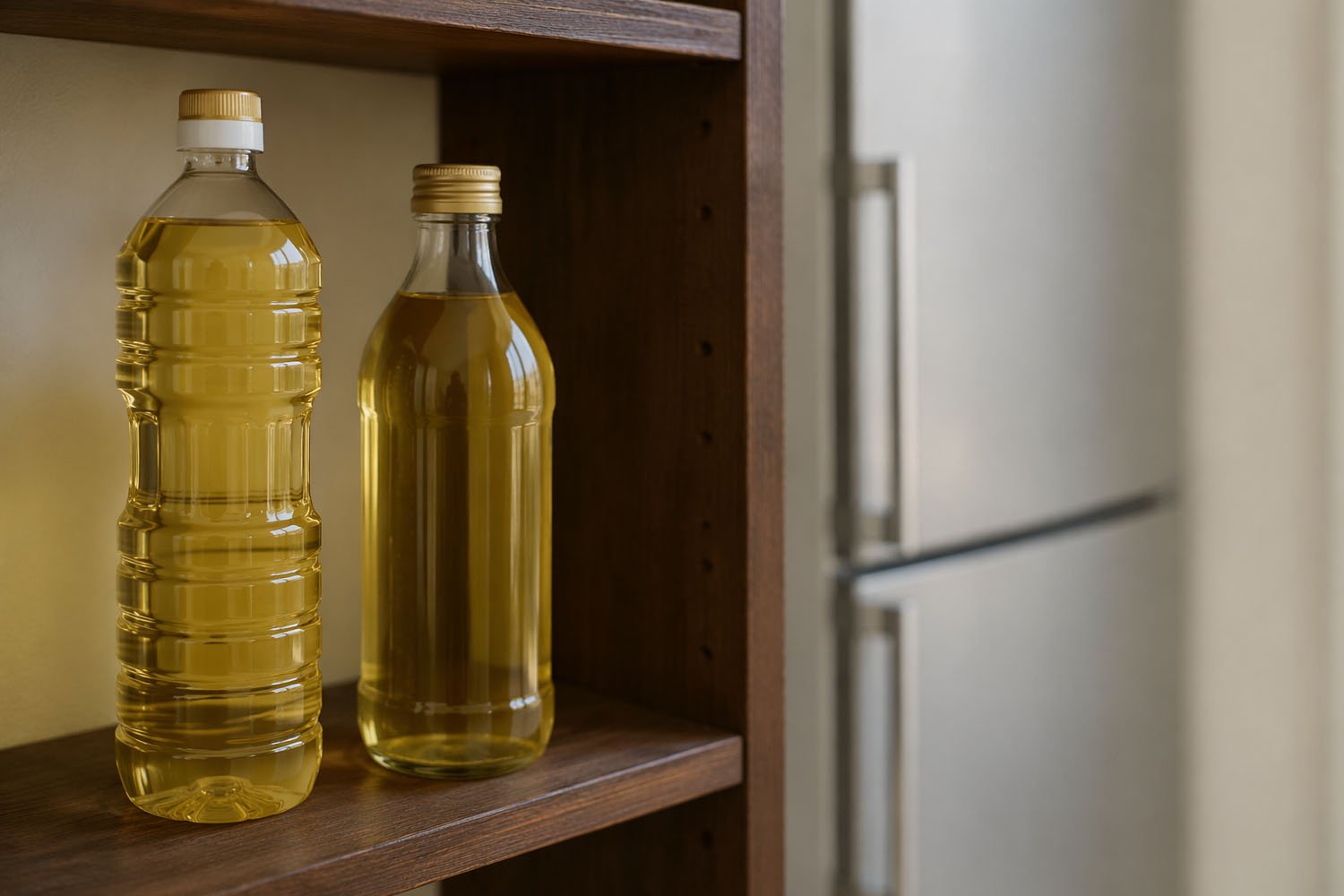
You have just finished cooking and the oil is on the table. Should it be refrigerated? Did it have to be in the fridge the whole time? Should the cooking oil be cooled?
Short answer: For most everyday cooking oils (vegetable, canola, olive), no. A cool, dark pantry is a good place for storage. Refrigeration of these oils is harmless, but not necessary, and may become cloudy or thick. The exceptions are delicate high-PUFA oils such as flaxseed, walnuts and hemp, which really benefit from refrigeration.
To see how pantry staples compare in shelf life, visit our The Complete Guide to Food Storage.
To take the keys
- Most cooking oils do not require refrigeration. Vegetable, canola, olive, sunflower and coconut oils store well in a cool, dark pantry.
- Some oils need to be cooled. Flaxseed, walnut, hemp and other high PUFA specialty oils are so unstable that they require cold storage.
- Refrigeration of standard oils does not harm but it does cause cloudiness and thickening that can be uncomfortable. Quality is not affected.
- The real enemies are heat and light, no lack of cooling. Keep the oil away from the stove and out of sunlight.
- Worst place to store cooking oil it’s next to the kitchen, which most people do.
Why most cooking oils do not require refrigeration
Cooking oil is inherently stable. Unlike dairy, meat or fresh produce, oil has no water and little protein, meaning bacteria cannot grow in it the way they can in perishable food. The main function of the refrigerator is to slow down the growth of bacteria, and this threat does not apply to cooking oil.
What threatens cooking oil is oxidation: the chemical reaction between the oil’s fatty acids and oxygen, heat, and light that causes rancidity. Refrigeration slows oxidation slightly, but a cool, dark pantry accomplishes the same for most standard cooking oils. The FDA and USDA FoodKeeper both classify standard cooking oils as items for the pantry, not the refrigerator.
Oil to oil guide: pantry or fridge?
| Type of oil | The best storage | Duration open |
|---|---|---|
| Vegetable oil | Cool and dark pantry | Between 6 and 12 months |
| Canola oil | Cool and dark pantry | Between 6 and 12 months |
| Extra virgin olive oil | Cool and dark pantry | Between 6 and 12 months |
| Sunflower oil | Cool and dark pantry | Between 6 and 12 months |
| Coconut oil | Cool and dark pantry | 1 and 2 years |
| Peanut oil | Cool and dark pantry | 6 to 9 months |
| Sesame oil (toasted) | Refrigerate after opening | 6 to 12 months in the refrigerator |
| Linseed oil | Always refrigerate | 1 to 3 months in the refrigerator |
| Walnut and hemp oil | Always refrigerate | 1 to 3 months in the refrigerator |
What if you refrigerate standard cooking oils?
Cloudy and thick is not spoiled
If you store vegetable oil, canola oil, or olive oil in the refrigerator, it will likely cloud and become thick or semi-solid. This may sound alarming but is completely harmless. This is a normal physical response: the fatty acid chains begin to crystallize at cold temperatures, just as butter solidifies in the refrigerator.
Bring the oil to room temperature and it will return to its normal clean state with no loss of quality. So refrigerating standard oils won’t hurt them. Using them without a warm-up period makes them uncomfortable in the first place.
Exception: If an oil becomes cloudy at room temperature and the cloudiness does not clear after sitting, and also has an odor, rather than crystallization caused by cold, it is rancidity. Discard
Oils that really need to be chilled
Flaxseed oil, hemp oil and walnut oil are very high in polyunsaturated fats, particularly omega-3 fatty acids. These fatty acids oxidize so quickly that even a fresh pantry can’t adequately slow down the process. These oils can go rancid within weeks of opening at room temperature.
Refrigerate these oils immediately after purchase and keep cold between uses. Buy in small bottles and use within 3 months of opening. If it smells fishy, paint-like, or even slightly off-putting, ignore it. Toasted sesame oils also benefit significantly from refrigeration after opening, as their more complex volatile compounds degrade more quickly than standard refined oils.
Worst thing you can do with cooking oil
Storing oil near the stove is the most common and also the most harmful oil storage mistake. The ambient heat of a kitchen, even when not in use, is significantly hotter than a pantry shelf. Oil stored in a cupboard above or near the stove heats up every time you cook, speeding up oxidation dramatically.
The same goes for the bottle of oil you leave on the counter for convenience. Light and heat will shorten its life significantly. Put it back in the cupboard after use.
Good storage practices
How to store cooking oil properly
Choose the right location. A cool, dark cupboard or pantry away from the stove and oven. Temperature consistency is more important than exact chills.
Keep out of direct light. If your pantry is light, consider opaque or dark colored glass containers. Clear plastic bottles from the store accelerate oxidation caused by light.
Close tightly after use. Contact with oxygen begins the moment you open the bottle. Replace the cap immediately and ensure a tight seal.
Buy in sizes that you will use within the shelf life. A large jug is economical, but wasted if it is drained before it is finished. Match the bottle size to your actual usage rate.
See also
Refrigerate high PUFA specialty oils. Linseed, hemp, walnut and similar oils should always be kept cold. Standard oils like vegetable and olive do not.
Never fill a bottle with fresh oil. Old oil at the bottom of a bottle accelerates the rancidification of fresh oil. Finish the old bottle, and start a new one.
Label the opening date. A date marker on the bottle takes the guesswork out of when a bottle has been sitting in the pantry for a while.
Recipes that use cooking oil
Frequently Asked Questions
I have been keeping my olive oil near the stove. Is it still good?
Do a smell and taste test. If it smells and tastes normal, it’s probably fine depending on how long it’s been there. Oil goes rancid faster when exposed to heat, so if it’s been near the stove for several months after opening, there’s a reasonable chance it’s already rancid or going that way. Extra virgin olive oil smells waxy, crayon-like, or stale, rather than fresh, fruity, or herbaceous. If in doubt, smell and taste a small amount. Move it to a cool, dark closet.
Can I refrigerate olive oil to make it last longer?
Yes, olive oil is safe to refrigerate and slows oxidation. The oil will become cloudy and very thick when cold, which is harmless. Bring to room temperature before use and return to normal consistency. For most people the drawbacks outweigh the benefits, as a cool, dark pantry is ideal for olive oil. If you rarely use olive oil and are worried about it going bad before the bottle is finished, the refrigerator is the right choice.
Does cooking oil go bad faster when open?
Yes, significantly. Every time you open the bottle, more oxygen comes into contact with the oil and oxidation is accelerated. An unopened bottle of vegetable oil can last 12 to 18 months. The same bottle, properly opened and stored, can last 6 to 12 months before quality declines. This is why the size of the bottle is important: if you brew infrequently, a smaller bottle that is quickly opened and finished will give you fresher oil than a large jug that has been open for many months.
Further reading
Better Living may earn commissions through affiliate links and may occasionally feature sponsored or partner content. If you make a purchase through our links, we may receive a small commission at no cost to you.
