
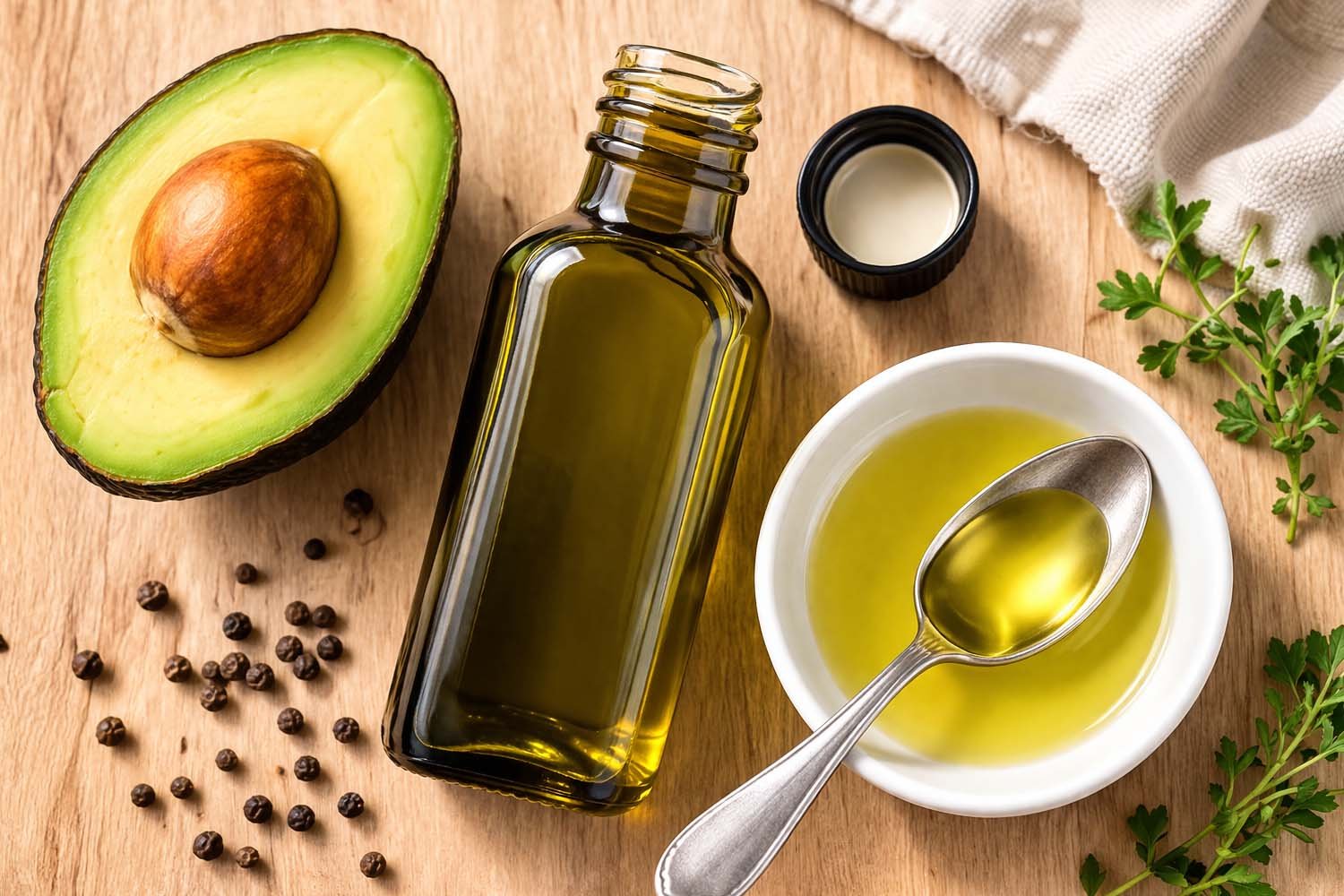
You see that bottle of avocado oil in the back of the cupboard and realize it’s been sitting there for quite some time. The following question: does avocado oil go bad?
Short answer: Yes, avocado oil goes bad. Like all cooking oils, it goes rancid over time through a process called oxidation. The good news is that avocado oil is one of the most stable cooking oils available, and with proper storage it can stay fresh for over a year.
To see how cooking oils and pantry staples compare in shelf life, visit our The Complete Guide to Food Storage.
To take the keys
- Avocado oil goes badmainly by rancidification due to exposure to air, heat and light.
- Duration: 1 to 2 years unopened; 6 to 8 months in open pantry; Up to 12 months in the refrigerator for refined, up to 8 months in the refrigerator for unrefined.
- It smells like avocado oil Like Play-Doh, crayons, or old wax. Trust your nose above all else.
- Refined avocado oil it lasts a little longer when opened than unrefined (extra virgin).
- Warning: UC Davis research has found that most commercial avocado oils are rancid or adulterated before opening. Knowing what to look for when buying.
How long does avocado oil last?
Avocado oil consists mainly of monounsaturated fats (about 70%), which are significantly more stable than the polyunsaturated fats found in sesame, flaxseed or walnut oils. That’s one of the reasons olive oil sits comfortably next to it when it comes to cooking oil shelf-stability.
| The type | Pantry (Unopened) | Pantry (Open) | Refrigerator (Open) |
|---|---|---|---|
| Refined avocado oil | 1 and 2 years | 6 to 8 months | up to 12 months |
| Extra virgin / unrefined avocado oil | Between 6 and 12 months | 4 to 6 months | Up to 8 months |
These are quality estimates based on proper storage. Always check for signs of spoilage before use, regardless of date.
The “by” date on your bottle is the manufacturer’s estimate of quality, not a safety limit FDA. A properly stored bottle that smells and tastes good can be good past that date. However, there is one significant caveat regarding avocado oil that is worth knowing.
Avocado oil adulteration problem you need to know
Your bottle may be bad before you open it
This is the point that most avocado oil storage guides completely skip. the researchers University of California, Davis He published two major studies on the quality of avocado oil. The first, in 2020, tested 22 samples and found that 82% were past their expiration date or adulterated with cheaper oils such as soybean, sunflower or safflower oil. In three cases, the bottles labeled “pure” or “extra virgin” contained almost 100% soybean oil.
A follow-up study in 2023 found similar problems, with nearly 70% of private label (store brand) avocado oils failing quality or purity standards.
The reason this happens is due to the lack of enforcement standards. Unlike olive oil, which has well-established standards and regulations, avocado oil has historically had no FDA identity standards to prevent mislabeling. This created an environment where fraud was easy and risk was low. At the end of 2024, the international food standards body Codex Alimentarius adopted new purity guidelines for avocado oil, which is a significant step forward, although enforcement at the retail level is still evolving.
This roughly means: don’t assume a bottle is good just because it’s within its best-by date. Always smell and taste before use, even a freshly opened bottle.
How to tell if you are buying quality avocado oil
UC Davis research identified some visual indicators of authenticity that are useful when shopping:
Virgin or extra virgin avocado oil it should be bright green. The green color comes from the chlorophyll in the avocado fruit. If the yellow bottle labeled “extra virgin” is pale or almost clear, it is a sign that the oil has been refined or adulterated.
Refined avocado oil it should be pale yellow and light to almost clear gold. This is normal for refined oil, as refining removes chlorophyll.
Price is a rough signal. The UC Davis researchers noted that very low-priced oils were more likely to be adulterated, even though a high price does not guarantee quality. Among the brands that passed the 2020 and later purity tests are Chosen Foods and Marianne’s Avocado Oil, both refined avocado oils from Mexico.
Dark glass bottles They offer better protection from light than clear plastic. If you have the option, choose a brand that uses dark or opaque packaging.
A sign that avocado oil has gone bad
When to throw
Smell: The most reliable test. Fresh refined avocado oil has a mild, neutral and slightly buttery aroma. Extra virgin avocado oil has a grassy aroma, buttery and a hint of avocado. Avocado oil smells like Play-Doh, crayons, wax, or paint thinner. Any of these odors mean immediate rejection.
Taste: Fresh avocado oil has a smooth, clean and slightly buttery flavor. Rancid oil has a bitter, pungent or soapy taste. If the smell test was limited, a small taste on a clean spoon will confirm.
Color: Refined avocado oil that has turned significantly dark or cloudy at room temperature is worth investigating. Extra virgin olive oil that has completely lost its green color and turned pale can be degraded. Color changes alone are not definitive, but require analysis of odor and taste.
What is NOT a sign of deterioration: Avocado oil may cloud or partially solidify in the refrigerator or at cold temperatures. This is caused by the natural waxes of the oil in the cold. It is completely normal, does not affect the quality and is completely reversible at room temperature. Likewise, a slight sediment in unrefined avocado oil is normal and not a sign of spoilage.
How to store avocado oil properly
Good storage practices
Cool and dark pantry for everyday use. A kitchen cupboard away from the kitchen and out of direct sunlight is a good place. Avocado oil is stable enough at room temperature that most people don’t need refrigeration, and Chosen Foods, one of the only brands to pass UC Davis purity testing, confirms in its official FAQ that its avocado oil does not need refrigeration.
To store in the refrigerator. If you have a large bottle, you won’t finish it quickly, or if you have unrefined avocado oil, refrigerators extend the shelf life significantly. The oil will thicken or solidify in the refrigerator but return to normal at room temperature.
Always hold the cap tightly. Oxygen is the main agent of corrosion. Close the bottle tightly after use.
See also
Never store near the stove. Heat and light greatly accelerate oxidation. The shelf or cupboard above the range is one of the worst places in the kitchen for any oil.
Buy the right size bottles. If you don’t cook with avocado oil every day, a small bottle that you finish in a few months is a better choice than a large one that has been open for a year.
Label the opening date. Write the date you first opened the bottle on the label. This eliminates the guesswork when you get it a month later.
Avocado oil recipes are worth trying
If your avocado oil is fresh and ready to use, these Better Living recipes are a great place to start. Avocado oil’s high smoke point and neutral flavor make it great for high-heat cooking and everyday sautéing:
Frequently Asked Questions
Can I use avocado oil with a slight fragrance?
no Even slightly rancid avocado oil will negatively affect the taste of your food and introduce oxidation byproducts that are not beneficial to your health. The smell test is your clearest signal. If it smells like crayons, wax or Play-Doh, replace it. A new bottle is always cheaper than a spoiled meal.
My avocado oil is cloudy or has sediment. Is it bad?
Cloudiness alone is not a sign of spoilage. Cold temperatures cause the oil’s natural waxes to solidify, creating cloudiness. Sediment in non-virgin or extra-virgin avocado oil is also normal. It consists of natural plant particles from the cold pressing process. Bring the oil to room temperature and check for aroma. If it smells fresh and clean, it’s good to use.
Is avocado oil more stable than olive oil?
They are comparable. Both are primarily monounsaturated fats and have similar stability at room temperature. Avocado oil has a significantly higher smoke point (about 520 degrees F for refined) compared to olive oil, making it better for high-heat cooking. For storage purposes, treat them similarly: cool, dark pantry for daily use, refrigerate for longer term storage.
How do I know if my avocado oil is really avocado oil?
It’s a legitimate concern according to the UC Davis study. Avocado oil should be virgin or extra virgin green. Refined avocado oil should be pale yellow. Oil labeled extra virgin, pale or yellowish, is a flag. Brands confirmed through independent testing include Chosen Foods and Marianne’s Avocado Oil. Avocado oil from unknown sources is too cheap to be adulterated.
Can you freeze avocado oil?
yes Avocado oil can be frozen for very long-term storage, although this is rarely necessary given its already reasonable shelf life. Frozen oil should be thawed at room temperature before use. Freezing does not affect quality, although repeated freeze-thaw cycles over a long period of time can gradually affect the taste.
Further reading
Better Living may earn commissions through affiliate links and may occasionally feature sponsored or partner content. If you make a purchase through our links, we may receive a small commission at no cost to you.
