
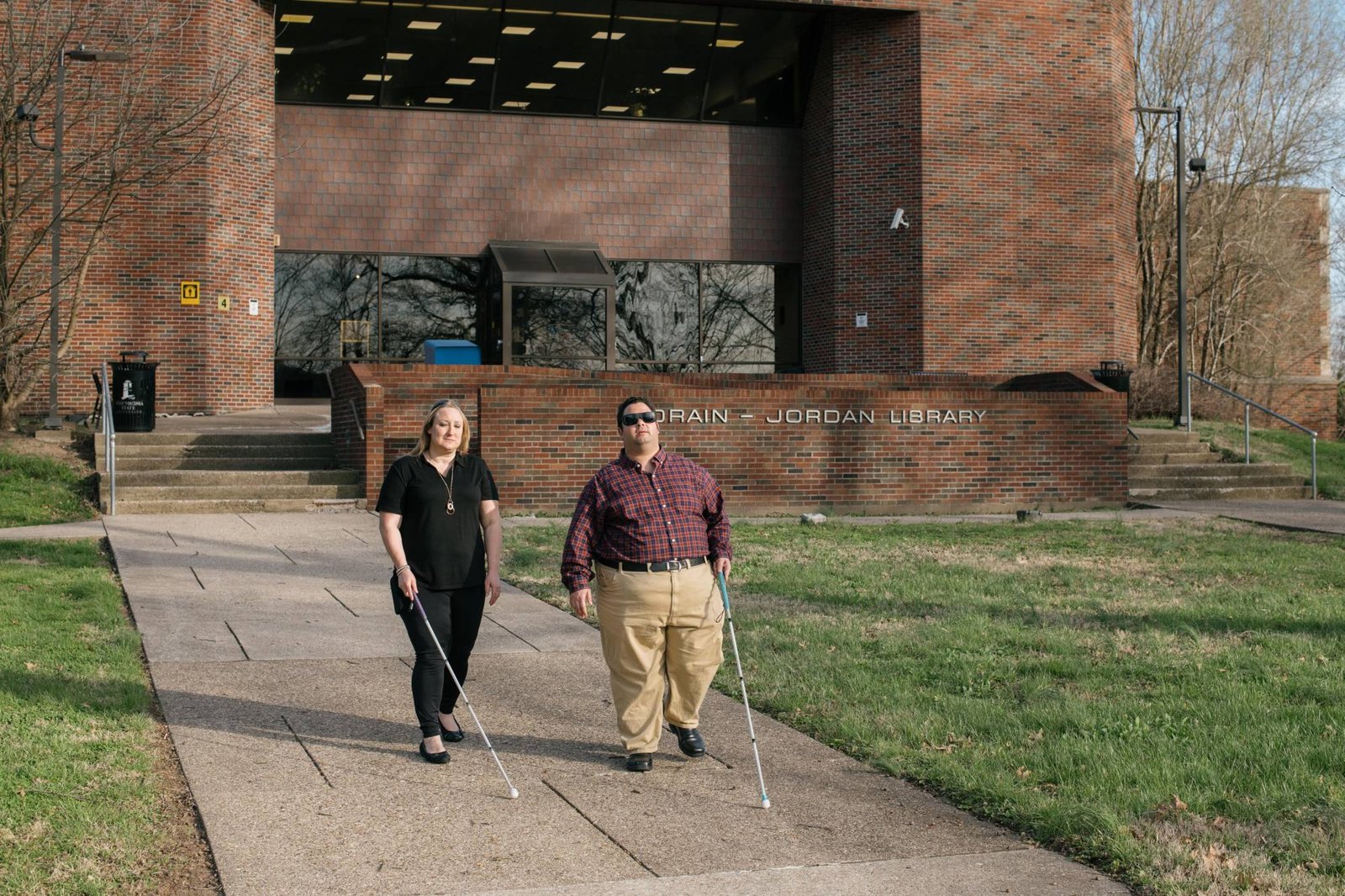
“Once again, the blind were told to wait to live on equal terms,” O’Connor said. He pointed out that despite the new rule, international web accessibility standards have been around since 1999.
The Association for Higher Education and People with Disabilities (AHEAD) joined the chorus in rejecting the last-minute change. “AHEAD and its members have long awaited clear and timely guidance that reflects current technologies, learning models and student needs,” said Katie Washington, AHEAD President.
The organization represents disability resource personnel, including ADA coordinators, at colleges and universities. “Delaying these updates slows critical momentum and leaves institutions without the clarity needed to fully realize equitable access,” Washington said.
Addressing the need for clear guidance
Corb O’Connor, who is blind, said the delay isn’t just about waiting another year for accessibility. “We’ve waited almost 36 years since the law that guaranteed these rights, the one that heralded a new era of access, was signed into law.”
He means Title II of the ADA, the 1990 law, which has long promised accessibility for people with disabilities, including in the digital realm. But before this rule, the ADA didn’t spell out what accessibility should look or sound like.
The new regulation announced in 2024 aimed to change this by directing institutions to a set of technical guidelines known as WCAG 2.1. Provides a clear checklist of accessibility requirements that their web and mobile content must meet.
This includes transcriptions for audio clips, captions for videos, and ensuring that PDF files and other web pages are friendly to screen readers, the assistive technology that blind people use to interpret visual content into audible speech.
“The certainty, clarity and timelines within these regulations have a powerful local impact,” said O’Connor, who is also the parent of a blind child. “Within minutes of the first meeting with my son’s elementary school principal, he knew the deadline was April 24, 2026.”
Jennifer Mattis was at the Department of Justice when the original rule was announced and helped draft it. She noted that there have been many previous attempts by the federal government to formalize web accessibility guidelines. And Mattis said that while the need for digital accessibility has been strong and clear from people with disabilities, calls for clear guidelines have also come from public institutions themselves.
“The whole point of this particular rule was to create certainty and clarity for everybody,” Mattis said. “To slow down the standards now, after 16 years and an incredibly thorough rulemaking process, is just senseless and cruel.”
In delaying the new requirements, the Justice Department cited concerns from higher education, elementary and secondary education advocacy groups about the cost and staff resources needed to implement them.
“Many districts are already financially stretched and operating in an environment where schools are being asked to do more with less,” said Sasha Pudelski of AASA, the Association of School Administrators, which primarily represents K-12 school leaders.
AASA was one of the organizations that met with federal government officials to request a delay. The organization surveyed its members and found that most districts said they would struggle to pay for compliance costs.
“The scope, pace and unfunded nature of this requirement reflects a significant gap between federal expectations and the fiscal and human capital realities of local school systems,” Pudelski said.
While a federal digital accessibility rule may not be effective for at least another year, there are number on successful legal actions holding colleges and other responsible institutions for equal access to learning materials.
Edited by: Steve Drummond
Visual design and development by: LA Johnson
