
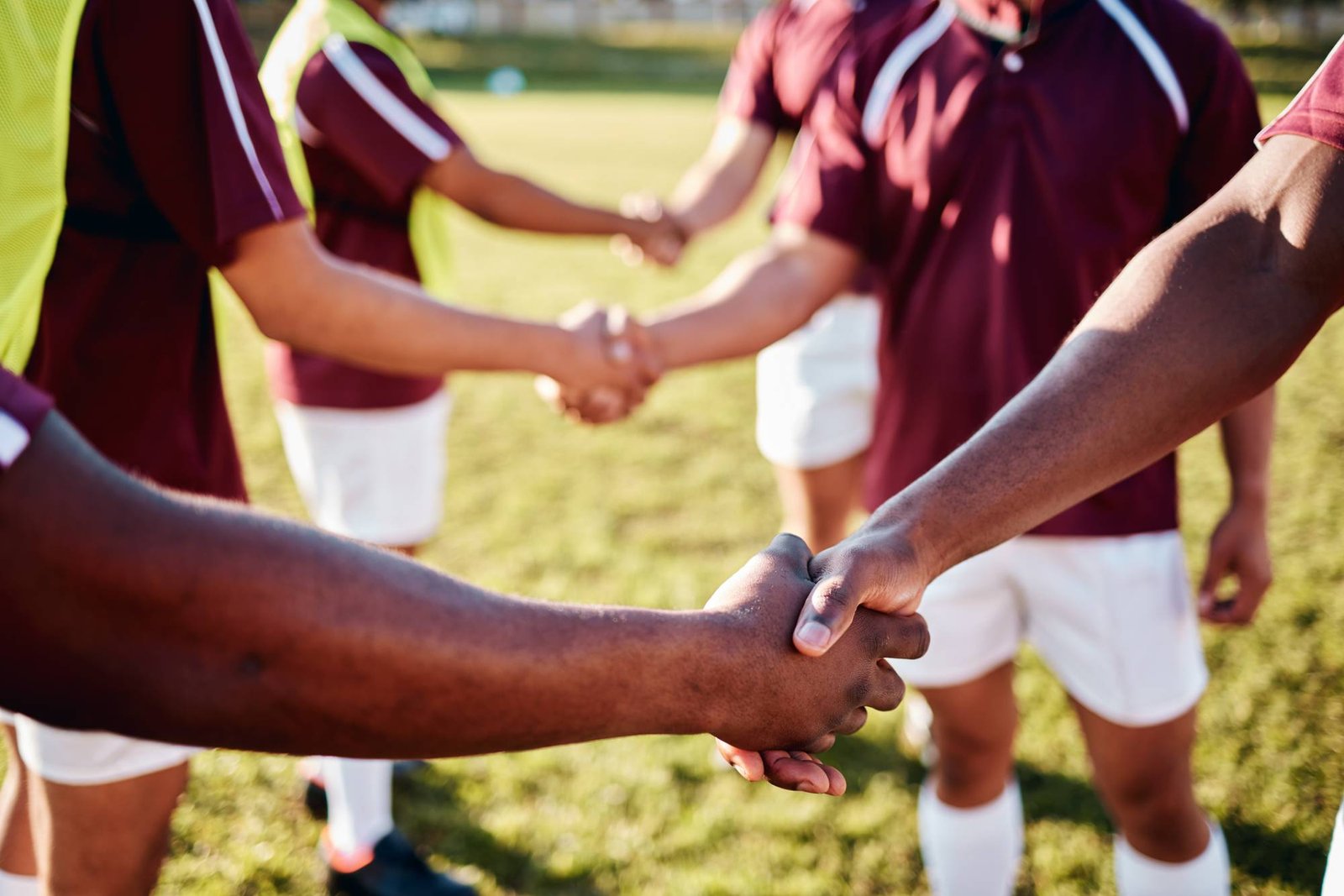
“Most sports are about motor skills, not moral skills,” Stoll told me. “It doesn’t magically happen because you walk, bike or run,” she added. The main dilemma for coaches is this: what are you willing to do to win?
Some schools are taking deliberate steps to incorporate character education into their athletic programs. At Menlo School in California, for example, a water polo coach Jack Bowen offers a model for how coaches and schools can make character development central to their teams. Bowen believes that athletic teams offer a natural environment for teaching moral reasoning because ethical dilemmas arise frequently in sports—and the children who play are a captive audience for learning.
Ethics training for the team begins during the preseason when Bowen recruits articles for the players to read. Most of the stories are not sports related. He then invites the teenagers to talk about what they have learned, first in smaller groups and then as a whole team; smaller groups allow for more emotional risk-taking, Bowen said.
The team also immerses itself in the mission of the athletic department statement which espouses four core ideas: Pursuit of Excellence, Celebrating Team, Honoring the Game and Upholding Strong Values. Discussion is not a one-time event. Rather, Bowen elicits players’ opinions on ethical challenges that arise during the season, seeking to align the mission with what they do in practice and during games.
During the 2025 season, for example, Bowen noticed one of Menlo’s players sarcastically waving at a teenager on the opposing team when that player fouled out. Because he cares about the development of the teenager and believes in the principles that guide the team, Bowen took his own player out of the pool.
“I had to do it and the team understood,” Bowen said. It is not a punishment, he added. Afterwards, coach and player spoke at length about what had happened and how the taunting of the opponent, however subtly, disgraced the game.
Sean Spellmanhead basketball coach at Roxbury Latin School in Massachusetts, emphasizes a less formal concept of building character in his teams.
“It starts with the philosophy of the school and knowing and loving each of the athletes,” Spellman told me. “There’s a real caring and connection there, regardless of how they are as a defensive basketball player.”
This year, he handed out a 65-question survey to the team that went beyond sports. Who do they admire? When do they feel best – and worst? During a weekly film session that Spellman used to connect personally with the players, he introduced “Teammate Jeopardy” to encourage the kids to learn about each other. Like Bowen, Spellman engages the team in collective conversations: What does it mean to have pride and be part of Roxbury’s Latino community? What do we value here? While he’s transparent about the juniors’ game, Spellman reassures the teens that their basketball skills don’t diminish their value to the group as individuals.
It strives to make the character dimension of the sport palpable, even in the most tense moments of the game. Spellman will “burn a timeout,” as he put it, to remind players during tight games that it’s how they handle the high-stakes experiences that matter most because they’ll have a lot more to contend with as they age. “I appreciate what this high school sports experience is,” he said.
Coaches need help understanding how to balance competing goals. To that end, Dr. Stoll’s graduate student, Samantha Lewis, launched a podcast to help them discuss some of the ethical issues they will face. The coach’s dilemma: What will you do to win? examines the moral reasoning, nonsense, impact of name, image, likeness deals, etc.
Both coaches said the broader culture makes those lessons harder to teach. Spellman bemoaned the way some team sports have become vehicles for individual performances, with kids fussing over their performance to the exclusion of the group.
“You’re trying to sell something that’s not taught in our society,” Bowen said. Stoll reminded me that children and teenagers need guidance to develop character through sports. They need engaging role models, a supportive environment and formal and informal education.
