
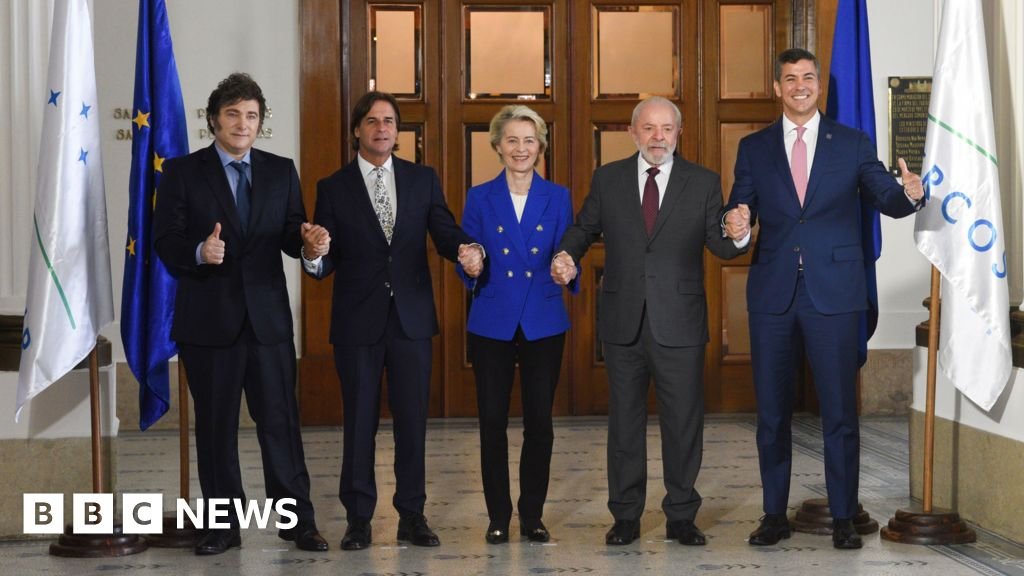
With the two blocs covering 700 million consumers and about 20% of global economic output, leaders on both sides hope that will grow when the deal takes effect.
The EU says 60,000 of its companies also export to MERCOSUR member countries, half of which are small businesses.
Negotiations first started in 2000. A previous agreement did not enter into force in 2019 after EU members failed to ratify it due to concerns over environmental protection, including sustainable farming practices and deforestation.
Trade policy is negotiated by the European Commission, not its member states, but France, Italy and Poland have expressed reservations about the current deal, and the challenge for Brussels will be to get them all to ratify it.
Farmers in France and Poland have expressed concern that they will face unfair competition because European rules in their industry are tougher and more expensive to comply with than those of rivals in South America.
In a defiant post on social media shortly after the announcement was made, French Trade Minister Sophie Primas said: “What is happening in Montevideo is not the signing of an agreement, but simply the political conclusion of negotiations. It does not bind member states.” .
She added that “France will fight at every stage together with the member states that share its vision.”
The prospect of increased foreign trade will be particularly welcomed by Germany, whose exporters are struggling amid a wider economic downturn.
Government spokeswoman Christiane Hoffmann said the agreement was a “unique opportunity for an agreement that we must not miss” and that Germany was working to find a compromise on French concerns.
