
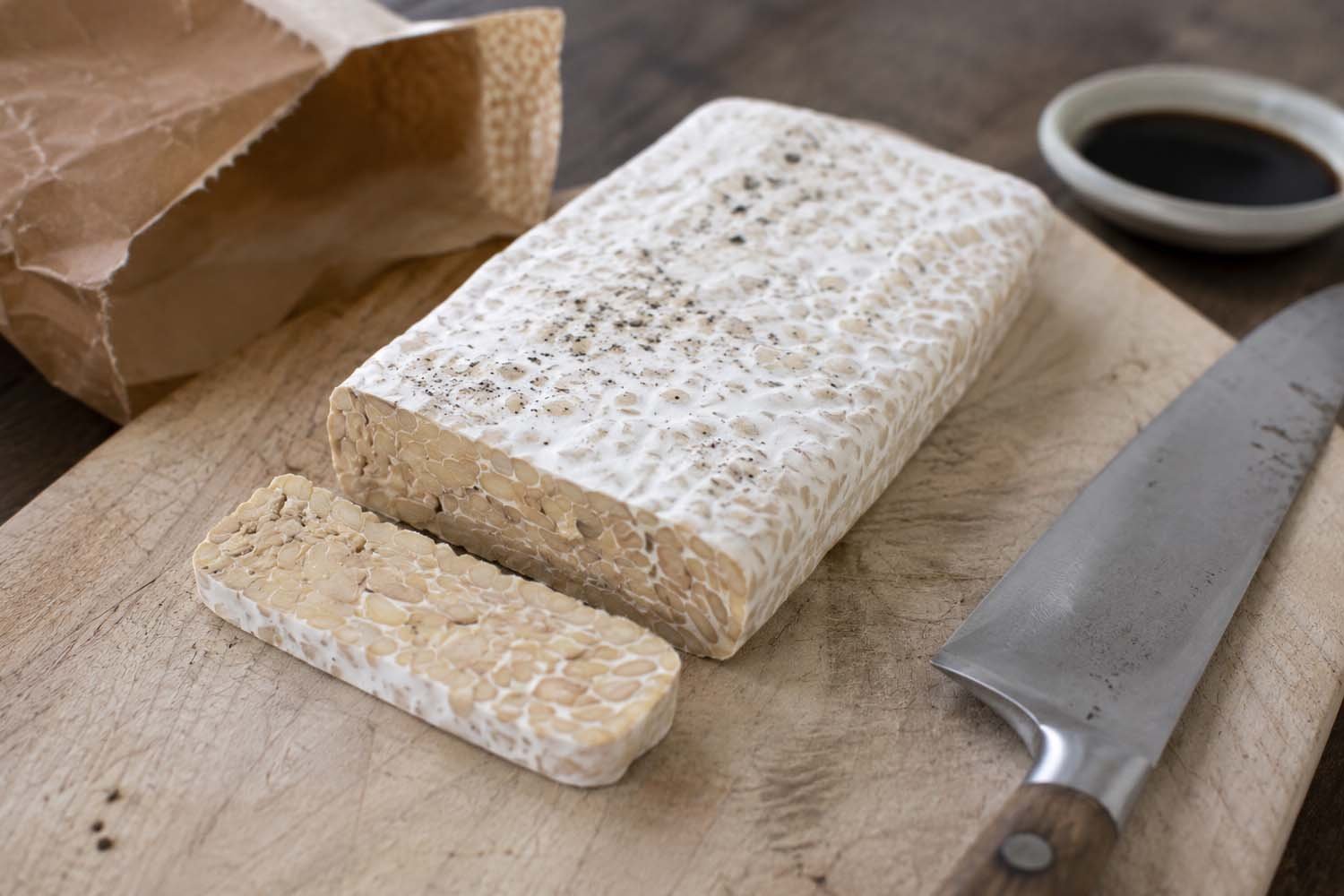
You’ve opened a package of tempeh and it’s covered in white skin with some dark spots. It seems to have gone wrong. You are about to be kicked out. Before you make it: This is what fresh, healthy tempeh looks like. Knowing one fact will save you throwing away perfectly good food more than once.
Tempeh going bad?
Short answer: Yes, but the signs of spoilage are different from most foods because tempeh is a living fermented product. Opened tempeh will last 3 to 5 days in the refrigerator in an airtight container. Unopened refrigerated tempeh is usually good for 5 to 7 days from the sell-by date when kept cold continuously. White mold and black or gray spots are normal and safe. It means discard pink, green or blue mold. It means avoiding the smell of ammonia.
To see how fermented and plant-based foods are stored, see our Food storage guide. If you also cook with tofu, see Tofu going bad?
To take the keys
- Open tempeh: 3 to 5 days in an airtight container in the refrigerator
- Chilled unopened tempeh: 5 to 7 days after sell-by date if continuously cold
- Vacuum-sealed pasteurized (store-bought) tempeh: can last weeks after sell-by date unopened
- Cooked tempeh: 3 to 5 days in the refrigerator
- Freezer: up to 3 to 6 months; slight texture change but sure
- White fuzzy coating and black or gray spots: normal, not spoilage
- Pink, green, blue or orange mold: Spoilage, discard immediately
- Ammonia or pungent chemical smell: destroy, discard
- Ambient temperature limit: 2 hours
Why tempeh looks different from other foods
Tempeh is made by inoculating cooked soybeans with a mold culture called Rhizopus oligosporus and allowing them to ferment. The mold binds the soybeans into a dense cake and creates the white mycelial coating you see outside. This coating is not a sign of deterioration. The mold culture is what made tempeh in the first place, and it continues to grow slowly in the refrigerator.
Most of the confusion surrounding spoiling tempeh comes from applying the wrong frame. For most foods, this means throwing out visible mold. For tempeh, the white mold on the skin is a sign of a healthy and active product. It’s not about whether there is mold or not. The question is what color it is.
Most store-bought tempeh has been pasteurized, which kills the live cultures and significantly extends its shelf life. Pasteurized tempeh will show less mold activity in the package, but the same spoilage indicators apply. Fresh, unpasteurized tempeh from specialty markets or Asian grocery stores has live cultures and will show more pronounced mycelial growth. Both types should be refrigerated and follow the same time windows.
How long does Tempeh last?
| The type | the refrigerator | the freezer |
|---|---|---|
| Unopened, fresh or vacuum sealed | 5 to 7 days after the sale period | Between 3 and 6 months |
| Open, raw | 3 to 5 days airtight | Between 3 and 6 months |
| Boiled Tempeh | 3 to 5 days airtight | Between 3 and 6 months |
Tempeh’s sell-by date is a stocking guide to the grocery store, not a hard safety cut. Unopened tempeh that has been kept cold for a long time often remains good for several days. The use-by date or expiration date is a better guide when printed. Once opened, the time it is opened is more important than any date on the package.
A Guide to Mold Colors: What’s Normal and What’s Not
This is the most important part for anyone new to cooking with tempeh. The color of the tempeh’s mold tells you almost everything about whether it’s safe.
Normal and Safe
- White fuzzy coating: The Rhizopus mycelium that makes tempeh everything. A thick white crust on the outside of the block is a sign of a fresh and well-fermented product. It should be all over the block, binding the soybeans together.
- Black or gray spots: Mature Rhizopus spores. As the mold culture ages, it develops black or gray spots where the white mycelium is multiplying. It is a normal part of the fermentation life cycle. Spots can give the tempeh a slightly stronger flavor, but do not indicate spoilage.
- Generally, a light gray shade: As the tempeh ages in the refrigerator, the white exterior gradually turns gray. normal If the smell and texture are fine, tempeh is fine.
Not Normal Reject Immediately.
- Pink mold: Contamination by an alien mold species, not Rhizopus. Discard the entire block.
- Green mold: pollution Discard
- Blue mold: pollution Discard
- Orange or yellow spot: pollution Discard
- Fuzzy growth of any color other than white or gray: pollution Discard
The rule is simple: white and gray are Rhizopus culture and are safe. Any other color means that a foreign organism has taken over and the tempeh should not be eaten.
How to tell if Tempeh has gone bad
The color of the mold is the first check, but not the only one. Healthy tempeh has a mild, earthy mushroom flavor with a faint yeasty or fruity nuttiness. It should smell like a good mushroom or a piece of quality bread: earthy and soft, nothing sharp or chemical. The smell becomes stronger and more pungent as the tempeh ages, this is normal, but it should never contain ammonia, harsh chemicals or decay.
Signs Tempeh Is Bad
- Ammonia or chemical smell: The clearest sign of deterioration. A faint ammonia note may develop as tempeh ages and is a sign to cook immediately rather than store further. It means avoiding strong ammonia smells or harsh chemicals. Don’t cook in it hoping the smell will go away.
- Pink, green, blue or orange mold: As explained above. Foreign mold contamination. Discard the entire block without cutting the affected area.
- Viscous texture: Fresh tempeh is firm and slightly dry on the skin. A slimy or wet coating leads to bacterial growth and spoilage.
- The soybean turned dark brown or black inside: The beans inside fresh tempeh should be beige or cream in color when you cut into the block. Dark brown or black all over the interior may indicate over-fermentation. Naturally, dark spots inside are not always a definitive rejection sign, as Rhizopus spores can develop both inside and outside. Judge by smell and texture along with color. If the darkening inside smells of ammonia or has a slimy texture, discard it.
- Splitting without mold structure: Tempeh should hold firm when sliced. A block that falls on loose beans with no visible mycelium attached has degraded past the point of use. Keep in mind that frozen and thawed tempeh is more messy than fresh tempeh. Thawed tempeh that crumbles, but smells and looks normal, is safe to cook.
- Exceed the time window: Opened tempeh that is more than 5 days old should be discarded regardless of appearance.
Good storage practices
- Store tempeh in its original container until ready to use
- After opening, wrap the unused portion tightly in plastic wrap or transfer to an airtight container and refrigerate immediately
- Store toward the back of the refrigerator, not the door, for consistent temperature
- Do not store tempeh in water like tofu. It does not require submersion and excess moisture can promote unwanted mold growth.
- Label the tempeh with the date it was opened
- If you’re not going to use an opened block within 5 days, freeze it right away instead of waiting to see if it holds
Why Fermentation Doesn’t Make Tempeh Last Forever
See also

Tempeh’s fermentation gives it the natural antimicrobial properties of the Rhizopus mycelium, which is why it lasts longer than unfermented soy products like fresh tofu. But fermentation does not produce a stable product. Tempeh is still high in moisture and protein and supports bacterial growth if left at room temperature or refrigerated for too long. The USDA’s two-hour rule applies: tempeh left at room temperature for more than two hours in the refrigerator or discarded. In warm temperatures, the live fermentation culture also accelerates rapidly, which accelerates over-fermentation and makes the tempeh stronger, bitter, and ultimately safer.
Can you freeze tempeh?
Yes, and it’s the best way to significantly extend shelf life when you have more than you can use in a 3 to 5 day window. Tempeh freezes better than tofu. The dense and firm structure is less susceptible to texture degradation than the water of fresh tofu.
Once thawed, the texture may be a little more chewy than fresh tempeh, but it holds up well enough for most cooking applications, including stir-fries, side dishes, and marinades. To freeze: wrap the block tightly in plastic wrap, place in a freezer bag, squeeze out as much air as possible, and freeze for 3 to 6 months. Thaw overnight in the refrigerator rather than at room temperature. Use within 24 to 48 hours of thawing.
Further reading
Does Tempeh Go Bad FAQ
Is it safe to eat tempeh with white mold?
yes Temperate white mold is a Rhizopus oligosporus culture that fermented soybeans. It is not a sign of deterioration. It is a sign of a fresh and active product. Tempea, a tempeh producer, describes the fuzzy white exterior as the healthiest state the product can be in. Eat normally. The only mold colors that mean rejection are pink, green, blue, and orange.
What do the black dots on tempeh mean?
Black spots on tempeh are mature Rhizopus spores, not contamination. As the mold culture ages, it develops black or dark gray spots where the white mycelium is multiplying. This stage of the fermentation life cycle is completely normal and tempeh is safe to eat. Black spots can give a slightly stronger and more intense flavor. If the smell is good and the texture is firm, black spots are not a reason to discard.
How long does tempeh last after opening?
Opened tempeh will last 3 to 5 days when stored in an airtight container in the refrigerator. Applies to raw tempeh that you have cut but not yet cooked. Cooked tempeh also lasts 3 to 5 days in an airtight container in the refrigerator. If you know you won’t be using a block left open within that window, freeze it right away instead of letting it sit.
What does bad tempeh smell like?
Bad tempeh smells like ammonia or harsh chemicals. Fresh tempeh has a pleasant earthy and recognizable mushroom-like, slightly yeasty aroma. As you get older, the smell becomes stronger and more sour, that’s normal. The line is crossed when the smell becomes ammonia or some sort of putrefaction. If you’re not sure, smell control is more reliable than color for tempeh at the age limit.
Can you eat tempeh past its sell-by date?
Often yes, if the package is still sealed and the tempeh has been kept cold at all times. The sell-by date tells the retailer when to change stock, not when the product is dangerous. Refrigerated unopened tempeh is usually good for 5 to 7 days from the sell-by date. Vacuum-sealed pasteurized tempeh can last longer. Open it, check the smell, check the color of the mold, and use the full spoilage guide above. If it passes, cook well and eat.
My tempeh tastes bitter. Did it go wrong?
Not necessarily. Bitterness in tempeh is usually a sign of over-fermentation, meaning the Rhizopus culture has matured past its peak and the flavor has intensified with a smooth base and soft fruitiness. Over-fermented tempeh is generally safe to eat, but it’s less palatable on its own. Cooking with a marinade, soy sauce, or gravy usually masks the bitterness effectively. Bitterness becomes a rejection signal only when it smells of ammonia, has a slimy texture, or a foreign moldy color. Bitterness alone, without other warning signs, is a quality issue rather than a safety issue.
Better Living may earn commissions through affiliate links and may occasionally feature sponsored or partner content. If you make a purchase through our links, we may receive a small commission at no cost to you.
