
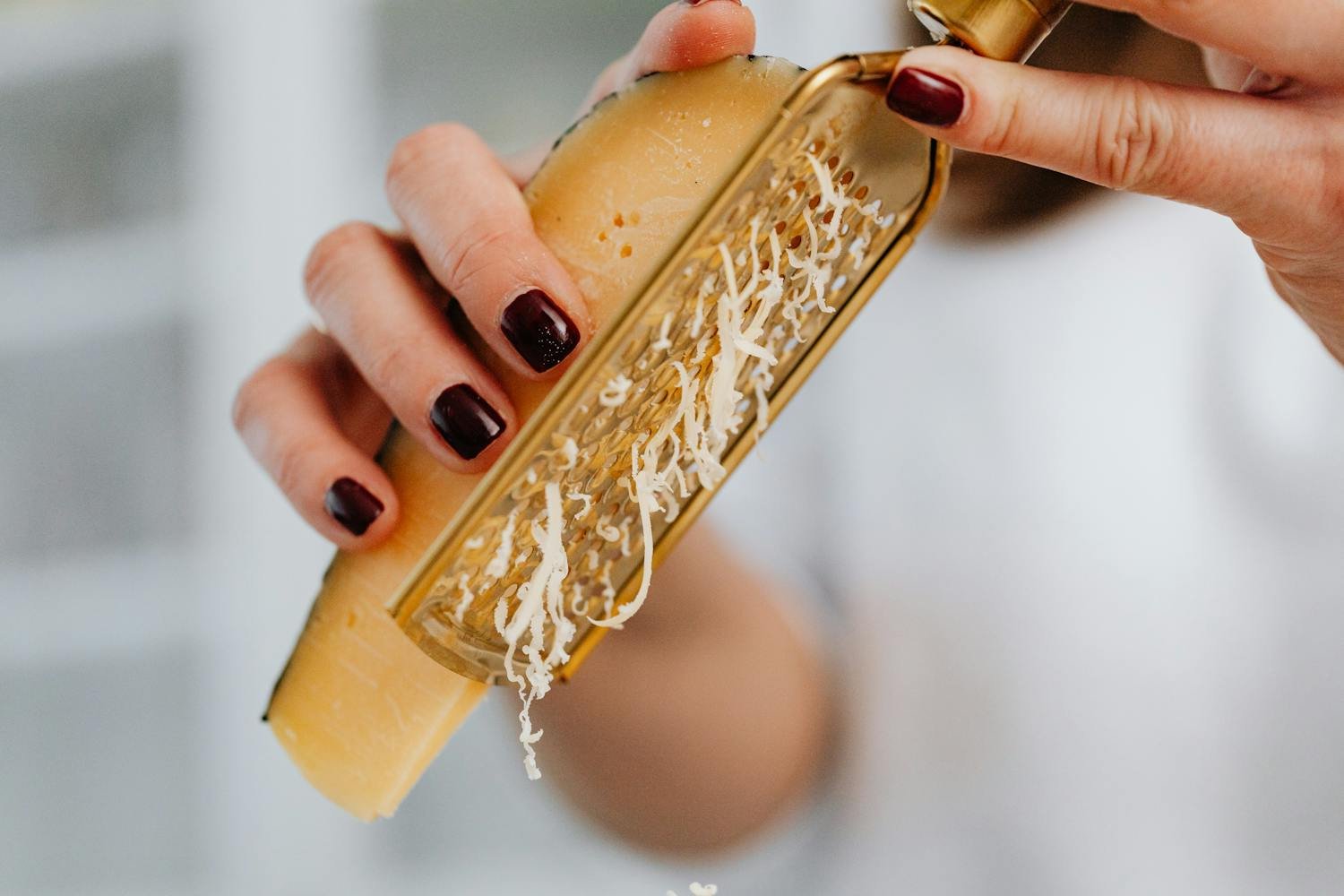
There’s a wedge of parmesan in the fridge that’s been open for six weeks and you’re not sure if it’s still good. Or a green can of grated Parmesan sitting in the pantry for a month after opening. Or a freezer bag of pre-shredded Parmesan that has been open for two weeks. Parmesan cheese going bad?
Short answer: Yes, parmesan goes bad, but the timeline depends entirely on what kind. A block or wedge of Parmesan will keep for 4 to 6 weeks in the refrigerator, unopened. Pre-shredded parmesan cheeses last 5 to 7 days in the refrigerator after opening. Green shelf-stable cans last 10 to 12 months after opening in the refrigerator. These are three completely different products with three completely different shelf lives. And those white crystals you see in seasoned parmesan are not molds. They are a sign that the cheese is well aged and delicious.
To see how dairy and perishable foods compare in shelf life, visit our The Complete Guide to Food Storage.
To take the keys
- Parmesan block or wedge (open): 4 to 6 weeks in the refrigerator. Unopened: 7 to 9 months.
- Pre-shredded chilled Parmesan (opened): 3 to 5 days best quality; 7 days at most. Use it quickly.
- Green Shelving Can (Kraft Style, Open): after opening in the refrigerator; Best quality between 10 and 12 months.
- The white crystals of aged Parmesan are not moldy. Tyrosine and calcium lactate crystals are safe, natural and a hallmark of good aging.
- The peel is edible and can be cooked in soups and sauces for added flavor.
- Mold on the Parmesan block: cut to about 1 inch and down per USDA. Discard the grated parmesan if it appears completely moldy.
- Parmesan freezes really well. Better than almost any other cheese. Shredded from a block goes straight from the freezer to the pan.
Three types of parmesan, three completely different shelf lives
Most publications about Parmesan treat it as a single product. It is not The three versions in most kitchens behave so differently that using the wrong storage rules for the wrong product wastes money or causes food safety issues.
The block, the crushed cooler and the green can: what you need to know
Block or wedge parmesan (the vacuum-sealed part or the wedge cut in the cheese section) is the most stable of the three once opened. Its very low moisture content, high salt concentration and solid structure make it hospitable for bacteria. When opened and properly wrapped in the refrigerator, it lasts 4 to 6 weeks. Unopened, it will last 7 to 9 months. This is the product most recipes mean when they say “freshly grated Parmesan.”
Pre-grated chilled parmesan (cheese sold in bags or containers in the refrigerator) has a larger surface area exposed to air than a block. More surface is faster to deteriorate. After opening, use within 5 to 7 days for best quality. It doesn’t last as long as expected.
Shelf green tin parmesan (Kraft and similar brands, sold on the shelf at room temperature) is a very different product. It is dehydrated, contains preservatives and anti-caking agents and has a very low moisture content. Unopened, it lasts about a year at room temperature. Open and refrigerate, StillTasty cites the best quality for 10 to 12 months. Despite what the pantry location may suggest, refrigeration after opening is recommended on most labels to maintain the best quality.
How long does parmesan cheese last?
| The type | Unopened | Open (Refrigerated) | Frozen |
|---|---|---|---|
| Block or wedge parmesan | 7 to 9 months in the refrigerator | 4 to 6 weeks | Between 12 and 18 months |
| Pre-shredded in the fridge (bag or container) | Use by date printed | 3 to 5 days best quality; 7 days at most | Up to 6 months |
| Fresh off the home block | Not applicable | 1 to 2 weeks | Up to 6 months |
| Green shelf can (unopened) | Pantry up to a year | 10 to 12 months in the refrigerator | It is not recommended |
Lock in the Parmesan’s shelf life according to DoesItGoBad.com and Gardner’s Wisconsin Cheese, citing the standard guideline for hard cheese. Green can per expiration life Still Tasty. Always check for signs of deterioration before use. consistent with USDA FoodKeeper guidance for hard cheeses.
Those white crystals are not molds
Aged Parmesan almost always develops white crystals, and is one of the most reliable sources of unnecessary food waste. Those crunchy white dots and patches are either tyrosine crystals or calcium lactate crystals, both natural byproducts of the aging process and completely safe to eat.
Tyrosine crystals it is formed when the amino acid tyrosine breaks down during aging and collects in the crisp white dots visible on the inside of the cheese. They are most common in hard aged cheeses such as Parmigiano-Reggiano and are considered a mark of quality among cheese connoisseurs. These are what give it the characteristic crunchy texture of aged parmesan.
Calcium lactate crystals it forms on the surface of the cheese as lactic acid combines with calcium and crystallizes. They appear as white powdery films or flat white patches on the outside.
Both are completely harmless. Anti-mold test: Crystals are crisp or powdery and flat. The mold is vague and raised. If the white area has visible texture, is raised above the surface, or has a blue, green, or gray color, it may be mold. If it’s white, flat and crisp when pressed, it’s crystals.
What about parmesan rind?
The dark, waxy outer skin of a Parmesan wedge is not moldy and not a sign of spoilage. It is a natural protective layer created during the long aging process. The skin is safe to eat, although it is too hard for most people to enjoy. The real value of Parmesan rind is in cooking: throw some into soups, stews, risottos or while pasta is cooking in sauce. It adds a deep umami richness and slowly softens on the plate. Store the skin in a ziplock bag in the freezer and add it to braises and soups whenever you have them.
Signs that Parmesan Cheese has gone bad
When to throw
Blurred mold in blue, green, gray or black: The fuzzy growth sticking out of the skin is actual mold, not crystals. For a block or wedge of Parmesan, apply the USDA Hard Cheese Rule: Cut at least 1 inch around and under the mold with a clean knife. For pre-shredded parmesan, toss the whole package right away. No exceptions.
A sour, ammoniacal or musty smell: Fresh Parmesan has a nutty, salty and sharp aroma in a pleasant way. Spoiled Parmesan has a sour, harsh, or ammonia-like odor. If the smell is more distinctive than the usual pungent parmesan smell, discard it.
Prominent darkening or discoloration beyond the skin: The interior of the Parmesan should be pale ivory and golden yellow with age. A noticeable gray, brown or pink color of the skin indicates spoilage.
Viscous texture: The parmesan block should feel dry and firm. A slimy coating on the surface means bacterial growth. Discard immediately.
Unusual collection of grated parmesan: Some build-up due to moisture is normal and can break down. Sets that are damp, have a bad smell or show any color changes mean rejecting the package.
Time: For refrigerated pre-shredded Parmesan, discard after 7 days of opening. For freshly ground, discard after 2 weeks. For block Parmesan, use within 6 weeks of opening. The green can lasts much longer, but must be checked for odor and mold before use.
Why Parmesan freezes better than almost any other cheese
Most cheeses undergo significant textural changes during freezing. Parmesan is the exception. Its very low moisture content means that there is very little water to form ice crystals that break the texture when frozen. Lock Parmesan frozen for 12 to 18 months with minimal loss of quality. Grated Parmesan freezes for 6 months.
Handy tip from Gardner’s Wisconsin Cheese: Shred Parmesan before freezing instead of freezing a block. Frozen grated parmesan goes directly from the freezer into pasta sauces, risottos or soups without thawing. No mess, no waste, no pre-planning. When you use up the last of a block, mash up what’s left, pack in a ziplock bag, and freeze.
How to properly store parmesan
Good storage practices
Wrap the Parmesan block first in parchment paper, then in plastic. Plastic wrap directly against the cheese traps moisture and can promote mold. The parchment paper allows it to breathe. Wrap in parchment paper and place in an airtight ziplock bag.
See also

Store the cheese in a drawer or crisper. A slightly more humid environment and a more stable temperature is used to make hard cheese. The back of a main shelf also works. Never the door.
Refrigerate the green can after opening. Most labels recommend it. Refrigeration extends the best quality beyond leaving it at room temperature. The very low humidity of the can gives it a long shelf life, but the refrigerator is better.
Do not grind more than necessary. Freshly grated parmesan from a block lasts 1 to 2 weeks. Grinding to order, rather than pre-grinding a large amount, preserves the flavor and extends the shelf life of the rest of the block.
Save the skin. Wrap the skin in a zip lock bag in the freezer. They add extra depth to any long-cooked dish.
Label with opening date. A block of Parmesan looks the same at 2 weeks and 7 weeks. A date on the wrapper tells you where you are in the window.
Freeze before the 6-week window closes. If you have more parmesan blocks than you can use, grate them and freeze them before turning them out instead of letting them go bad in the fridge.
Recipes that use Parmesan cheese
Frequently Asked Questions
My green can of Kraft Parmesan has been open for 8 months. Is it still good?
It’s possible StillTasty cites 10 to 12 months of best quality for the shelf-stable green can after opening in the refrigerator. At 8 months it is reaching the end of its best quality window, but it is probably still safe and useful. Smell it: If it has a sharp, plain nutty smell of Parmesan, without any sour or unpleasant notes, it’s probably fine. Check for mold or unusual buildup. If it smells normal and looks normal, use it for cooking. If in doubt, replace it. A new can is cheap.
My parmesan has crunchy white bits inside. Is it mold?
Almost certainly not. Those crisp white dots inside aged Parmesan are tyrosine crystals, a natural byproduct of the aging process where the amino acid tyrosine breaks down and gathers into visible crystals. They are completely safe to eat and are considered a quality indicator in well-aged Parmesan. They are also what give aged parmesan its light crunch. True Parmesan mold is fuzzy, raised, and appears on the surface rather than as uniform crisp dots throughout the interior. The crystals are white, flat and crisp. The mold is vague and raised.
Can I use parmesan rind?
yes The dark outer skin of a Parmesan wedge is completely edible and especially valuable in cooking. Add a piece of skin to soups, stews, risottos or pasta sauce while simmering. It slowly mellows and releases a deep, nutty, savory flavor into the dish. Many Italian chefs consider the rind to be the tastiest part of the cooking cheese. Store the peel in a sealed bag in the freezer and use it whenever you make a long-cooked dish.
Further reading
Better Living may earn commissions through affiliate links and may occasionally feature sponsored or partner content. If you make a purchase through our links, we may receive a small commission at no cost to you.
