
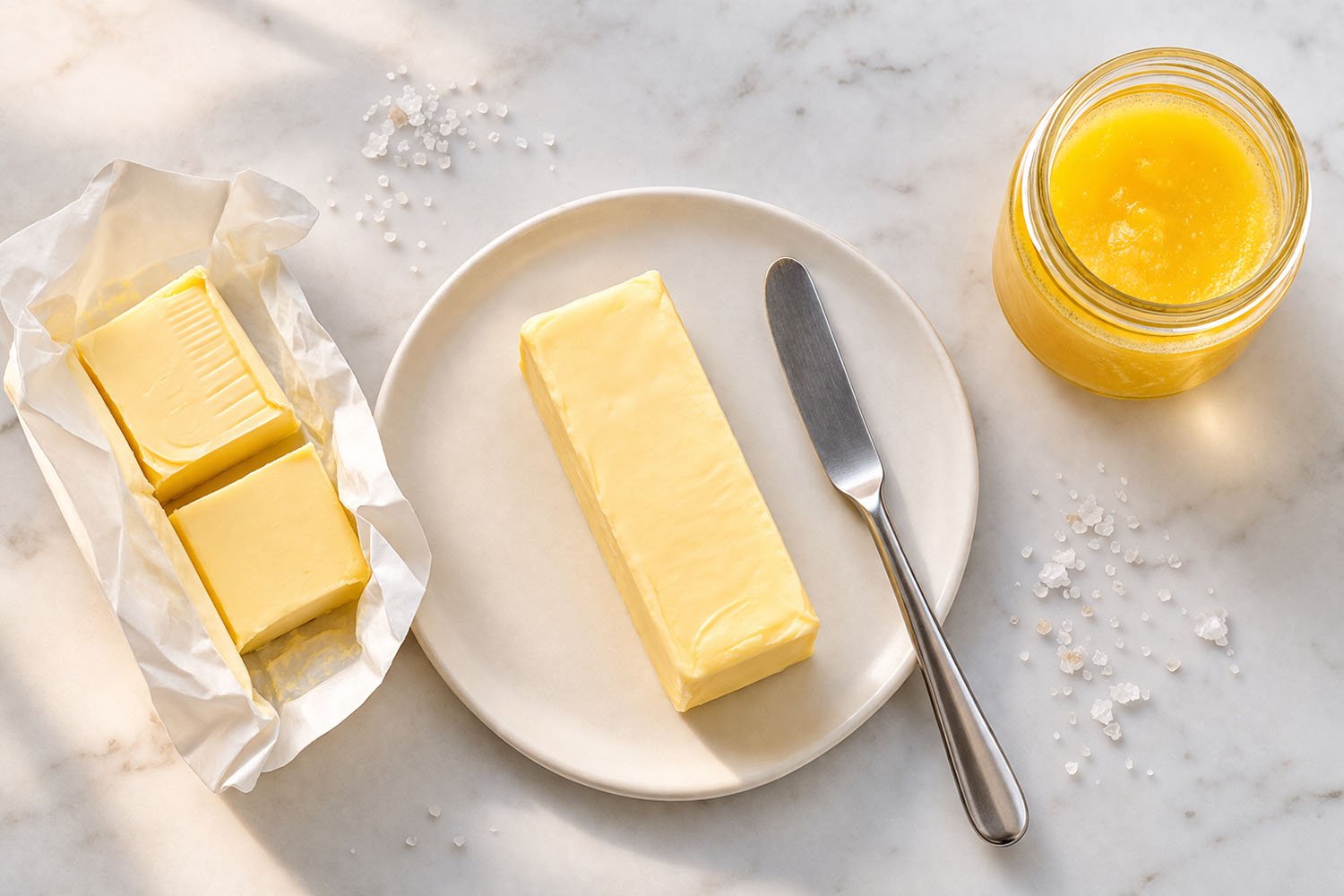
You find a stick of butter in the back of the fridge and wonder how long it’s been there. Or maybe you left the butter container on the counter and are now figuring it out. Does the butter go bad?
Short answer: Yes, butter goes bad, but it’s one of the most forgiving dairy products because it’s so high in fat and low in moisture. How quickly it spoils depends on the type of butter, where you store it, and whether it is salted or unsalted.
To see how dairy and grocery products compare in shelf life, visit our The Complete Guide to Food Storage.
To take the keys
- Butter goes badmainly through oxidation (fishiness) instead of bacterial growth.
- Salted butter lasts longer than unsalted at all storage temperatures. Salt is a natural preservative.
- Refrigerator: salted butter 1 to 3 months; 1 month without salt.
- Freezer: both types 6 and 12 months.
- Counter: salted butter 1 to 2 days per USDA FoodKeeper guidelines; unsalted must be in the refrigerator.
- Clarified butter and ghee is a completely different category and can last for months at room temperature without refrigeration.
How long does butter last?
Butter is about 80% fat with very little water, which makes it much more resistant to bacterial growth than other dairy products. The main cause of butter spoilage is oxidation, the breakdown of fats exposed to air, light and heat. Spoiled butter is not dangerous in the same way as spoiled meat, but it has an unpleasant taste and smell and is not worth eating.
| The type | the counter | the refrigerator | the freezer |
|---|---|---|---|
| Salted butter (unopened) | 1 to 2 days | Date printed from 1 to 3 months | up to 12 months |
| Unsalted butter (unopened) | It is not recommended | Up to one month before the printed date | 6 to 9 months |
| Whipped or flavored butter | It is not recommended | 1 to 2 weeks | Up to 6 months |
| Clarified butter / ghee (open) | Between 3 and 6 months | Up to 1 year | up to 2 years |
Quality calculations based on proper storage. They are in line with the guidelines USDA FoodKeeper recommendations Always check for signs of spoilage before use regardless of date.
Salted vs
This is the most important distinction in butter storage and one that most guides underestimate.
Salt is a natural preservative. It prevents the growth of microbes and reduces the water activity of the butter, making it more difficult for bacteria to get started. The 1.5% to 2% salt content of commercial salted butter gives it significant advantages over unsalted butter at all storage temperatures, but especially at room temperature.
Salted butter can be left on the table in a covered dish to spread daily. The USDA FoodKeeper the guidelines recommend using a butter counter after 1 or 2 days, which is a conservative safety standard. In practice, many homes and most European kitchens can keep salted butter covered at room temperature for long periods of time without problem, provided the kitchen is cool (below 70 degrees F) and the dish is clean and covered. The key risks are rancidity from oxidation and picking up flavors from surrounding foods, not bacterial disease.
Unsalted butter this salt protection is missing. It goes stale faster at room temperature and is more vulnerable to flavors. Unsalted butter is in the fridge. If you need a soft bake, take out only what you need and let it come to room temperature for 30 to 60 minutes before using, then return to the refrigerator.
Whipped and flavored butter they have extra moisture and sometimes fresh ingredients like herbs or garlic. These should always be refrigerated and used within 1-2 weeks.
The Counter Butter Question
Is it safe to leave butter on the counter?
For salted, pasteurized butter stored in a covered dish in a cool kitchen, yes. The FDA acknowledges that pasteurized butter is not always a time- and temperature-controlled food in the way that raw meats or dairy products are because its low moisture content does not support bacterial growth. USDA FoodKeeper guidelines place the practical window at 1 to 2 days before refrigerating.
Conditions that make counter butter safe: salted and pasteurized, in a covered butter dish or bowl, cooking temperature below 70 degrees F, and keeping a small amount out at a time. The main risks are loss of flavor and rancidity from exposure to air, light and heat, not a food safety disease.
Unsalted, whipped and homemade butters do not meet these criteria and should always be refrigerated. If your kitchen is warm or your immunity is compromised, keep the butter in the fridge and soften the pieces when needed.
Clarified Butter and Ghee: A completely different category
Clarified butter and ghee are made by heating butter until the water evaporates and the milk solids are removed, leaving almost pure butterfat. This process eliminates two things that make ordinary butter perishable: moisture and milk proteins.
The result is a product that is truly stable at room temperature. Open clarified butter or ghee stored in an airtight container in a cool, dark place lasts 3 to 6 months without refrigeration. In the refrigerator, it lasts up to a year. That’s why ghee has been a staple in South Asian, Middle Eastern and European cuisine for centuries before refrigeration.
The single most important storage rule for ghee: Always use a completely dry and clean utensil. Any moisture that gets into the container will create the conditions for mold.
Signs that butter has gone bad
When to throw
Fishy smell: The clearest sign. Fresh butter has a clean, sweet and creamy aroma. Rancid butter has a sour, soapy, chestnut or old paint smell. Trust your nose. Scaling is caused by oxidation, not bacteria; so butter won’t make you sick like spoiled meat would, but it will spoil anything you cook or bake with it.
Mold: Visible mold, usually a fuzzy blue, green, or white growth, means immediate rejection. Don’t cut around. Mold in the butter indicates that moisture has entered, which completely changes the storage conditions.
Sour or sour taste: If the smell test was limited, a small taste will confirm. Rancid butter has a sharp, sour or distinctly unpleasant taste. Fresh butter should be clean and slightly sweet.
Color changes: Fresh butter is pale and golden yellow. A yellow or darker brown color on the outside, especially on exposed surfaces, can indicate oxidation. The interior should be a uniform color.
What is NOT a sign of deterioration: Butter easily absorbs odors from the fridge, which can cause everything in the fridge to smell faintly. This is a storage and collection problem, not spoilage. Keep the butter in its original container or in a sealed container away from strong-smelling foods.
How to store butter for maximum freshness
Good storage practices
Keep the original packaging. Butter wraps are designed to block light and limit exposure to air. Keep the butter in its container until you need it. If you cut it on a stick, wrap the residue tightly in paper or place it in an airtight container.
Store away from strong smelling foods. Butter easily absorbs odors from nearby foods. Keep onions, garlic, fish and leftovers with strong aromas away by wrapping them tightly or using the butter compartment in the fridge door.
See also

Use the butter compartment in the fridge door for everyday use. The butter compartment in most refrigerator doors is slightly warmer than the main refrigerator, which makes the butter softer and easier to spread, while still keeping it cold enough for safe storage.
Freeze for long-term supply. Butter freezes very well in its original container. Wrap tightly in a layer of foil over the original container to prevent freezer burn. Salted butter lasts 12 months frozen; 6 to 9 months without salt. Thaw in the refrigerator overnight.
For storage, use a covered butter container. A properly covered butter dish or French butter dish (which uses a water seal to keep air out) significantly slows oxidation and keeps the butter fresher than exposing it. Refresh the dish every 1 or 2 days.
Label the frozen butter. Frozen butter looks the same. Mark the date and whether it is salted or unsalted before putting it in the freezer.
Recipes that use butter at its best
Butter is irreplaceable in baking. These Better Living recipes are built around that:
Frequently Asked Questions
Can I use butter past its best-by date?
Yes, in most cases. Butter’s best-by dates are quality indicators, not safety cut-offs. Butter with a normal smell and taste is usually properly refrigerated for use after the printed date. Salted butter is especially forgiving. Unsalted butter goes stale faster, so use your senses rather than the date. If it has a smell or taste, discard it regardless of the date.
My butter smells like the fridge. Is it bad?
Not necessarily. Butter is highly absorbent and easily absorbs odors from the refrigerator, especially if it is left loose or near strong-smelling foods. Flavored butter in the refrigerator is a storage problem, not a sign of spoilage. If it’s just the smell of the fridge, rather than really sour or pungent, it’s likely that the fridge smell will be used in cooked applications where it will be cooked. To spread the bread, it is worth replacing it with a cooler stick.
Why is the outside of my butter a different color than the inside?
This is normal and is caused by oxidation. The outer surface of butter exposed to air oxidizes more quickly than the protected interior, resulting in a slightly darker or yellow exterior compared to the paler interior. It is not a sign of deterioration. Simply remove the exterior if the color difference bothers you, or use it as is where you don’t mind cooking.
Does frozen butter change when thawed?
Very little if thawed properly. Thaw the frozen butter slowly in the refrigerator overnight. Rapid thawing may cause the butter’s water and fat to separate slightly, resulting in a more grainy texture when spread, but does not affect cooking or baking performance. For baking, frozen butter thawed in the refrigerator is essentially indistinguishable from fresh.
Should ghee be refrigerated?
no Properly made ghee or clarified butter has had the milk solids and moisture removed, leaving a nearly pure fat that is stable at room temperature. Store the opened ghee in an airtight container in a cool, dark place for 3 to 6 months. Refrigeration extends it to about a year. Always use a dry, clean utensil to avoid getting moisture into the jar, which can cause mold.
Further reading
Better Living may earn commissions through affiliate links and may occasionally feature sponsored or partner content. If you make a purchase through our links, we may receive a small commission at no cost to you.
